Gutter Sizing and Downspout Placement: Getting It Right
The two details most homeowners skip past when replacing gutters — and the ones that actually determine whether water stays away from your foundation.
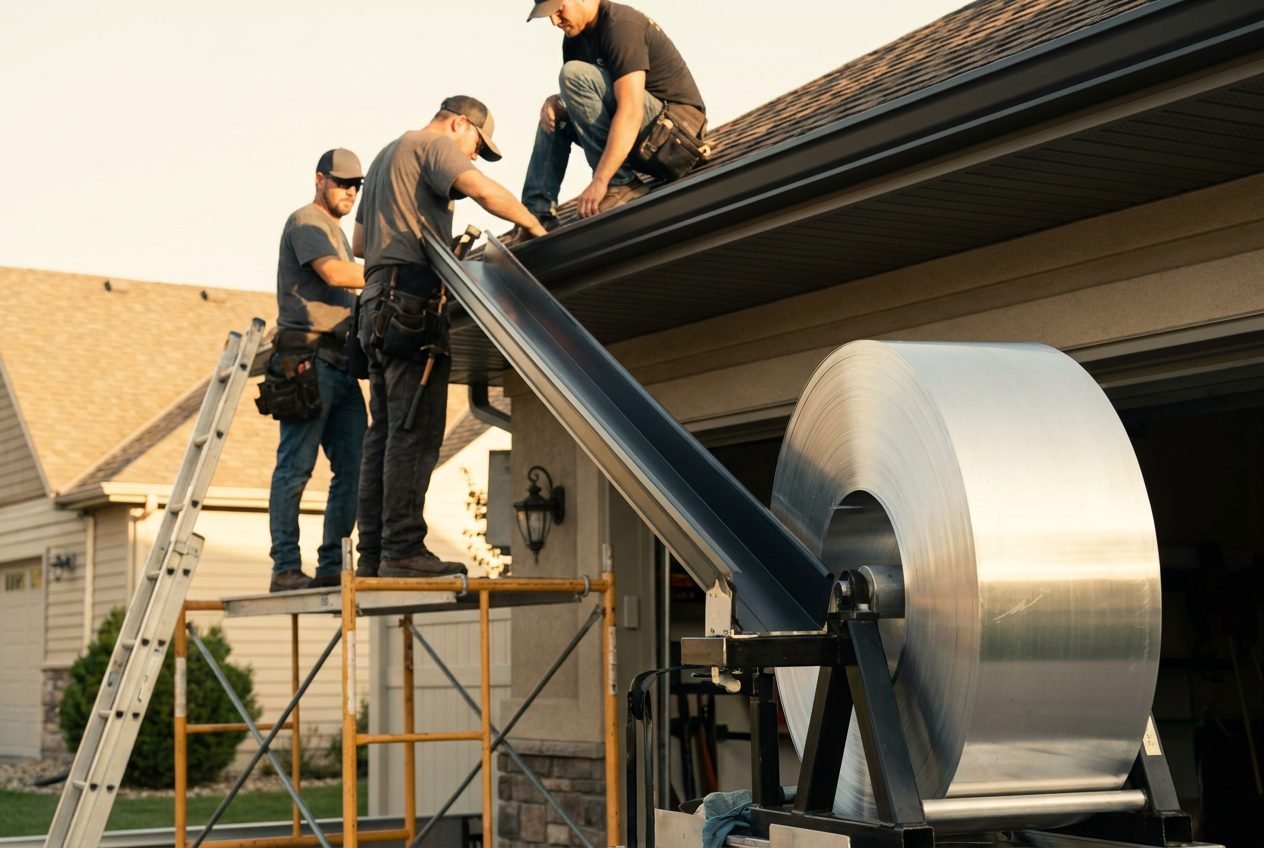
Why gutter size isn't one-size-fits-all
Standard 5-inch K-style gutters handle most residential roofs adequately, but larger roof areas, steeper pitches that accelerate water flow, or homes with a history of overflow during heavy rain often benefit from 6-inch gutters instead, which carry significantly more water volume before overtopping.
Calculating what your roof actually needs
Gutter capacity should be sized to your roof's square footage and the rainfall intensity typical for the area, not just matched to whatever size was there before. A roof that has consistently overflowed gutters during heavy storms is often undersized for its actual drainage load, regardless of gutter condition.

Downspout placement and quantity
Downspouts are frequently underspecified on older installations — too few, or placed without regard to where water actually needs to go once it leaves the roof. A general guideline is one downspout per 30 to 40 feet of gutter run, though roof shape and valley concentration points can require more.
Where the water goes after the downspout
Downspout placement solves half the problem; where the water discharges solves the other half. Extensions that carry water at least 4 to 6 feet from the foundation, or a connection to a drainage system on lots with grading challenges, prevent the water from simply pooling back against the house it was just diverted from.