The Homeowner's Roof Inspection Checklist
What you can reasonably check yourself from the ground, and what genuinely needs a professional on the roof.
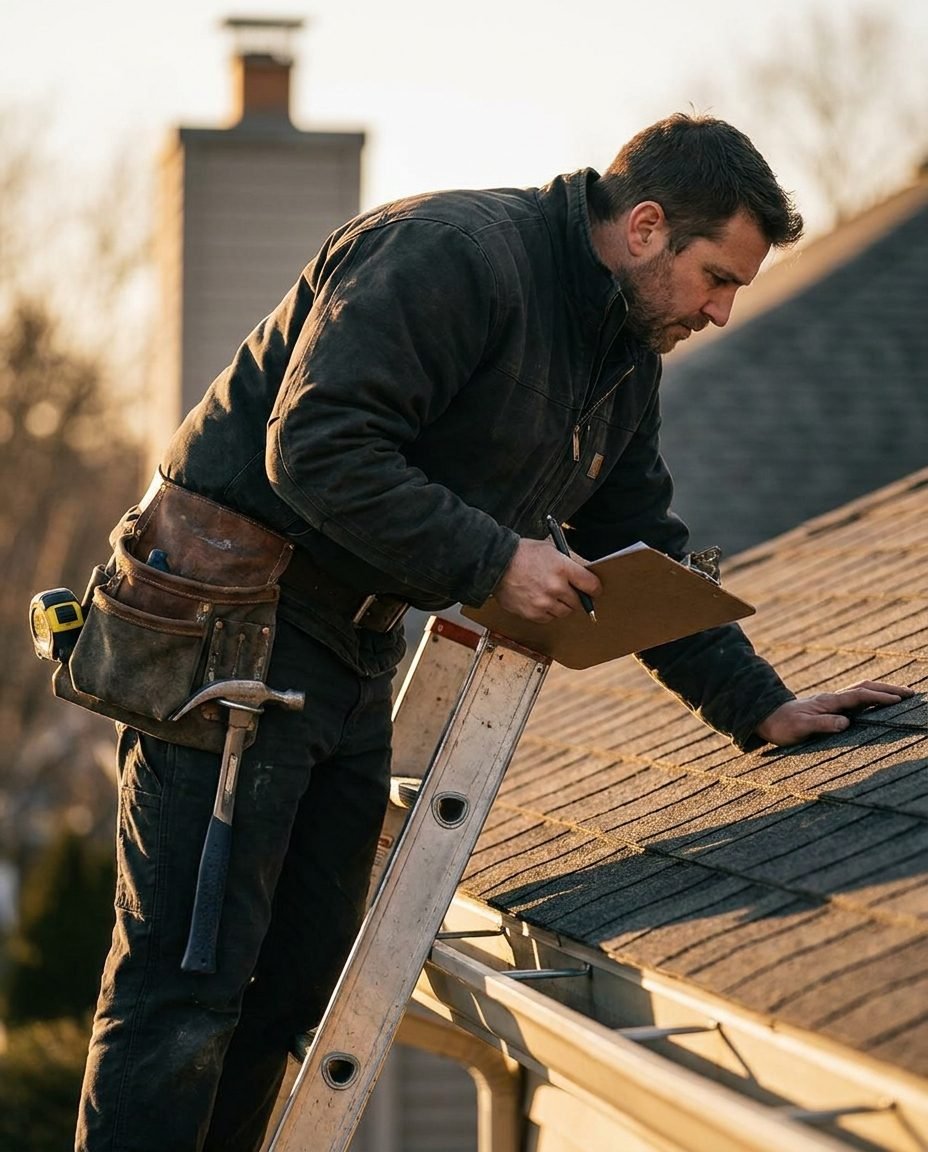
What you can check safely from the ground
Walk the perimeter of your home and look for: shingles that appear curled, cracked, or missing; granules collecting in gutters or at downspout discharge points; visible sagging anywhere along the roofline; moss or dark streaking on the roof surface; and gutters pulling away from the fascia. Inside, check the attic (if accessible) for daylight coming through the roof deck, water stains on the underside of the decking, and any damp or musty smell that could indicate a slow leak.
What genuinely needs a professional
Flashing condition around chimneys, skylights, and roof-wall intersections is difficult to assess without close-up access and roofing-specific knowledge — this is one of the most common leak sources and also one of the hardest to evaluate from the ground. Hail bruising, as covered in our hail damage guide, is frequently invisible without a close inspection. And any assessment of remaining roof lifespan or structural concerns needs a professional evaluation to be reliable.
How often to inspect
A general rule: professional inspection every 2–3 years for a roof under 10 years old with no known issues, annually for a roof over 15 years old, and promptly after any significant storm regardless of age. We offer free inspections, so there's no cost barrier to checking more often than that if you're unsure.