Driveway and Dumpster Planning for a Roof Project
Material delivery and debris removal can put more stress on a driveway than homeowners expect. Planning the staging area protects concrete, access, and the project schedule.

Ask where the dumpster or trailer will sit, how long it will remain, whether boards or other protection will be used, and how the truck will approach the property. A narrow drive or soft shoulder may require a different plan.
What to look for
Keep vehicles out of the staging area and tell the contractor about drains, buried utilities, low branches, and shared access. The shortest route for a truck is not always the safest route for the property.
After removal, inspect the driveway, walk, planting beds, gutters, and adjacent structures. Cleanup should include nails and lightweight debris, not only large pieces.
What to do next
Use the checklist below to make the next conversation specific. If the condition is active, unsafe, or connected to a storm, move the inspection up the calendar.
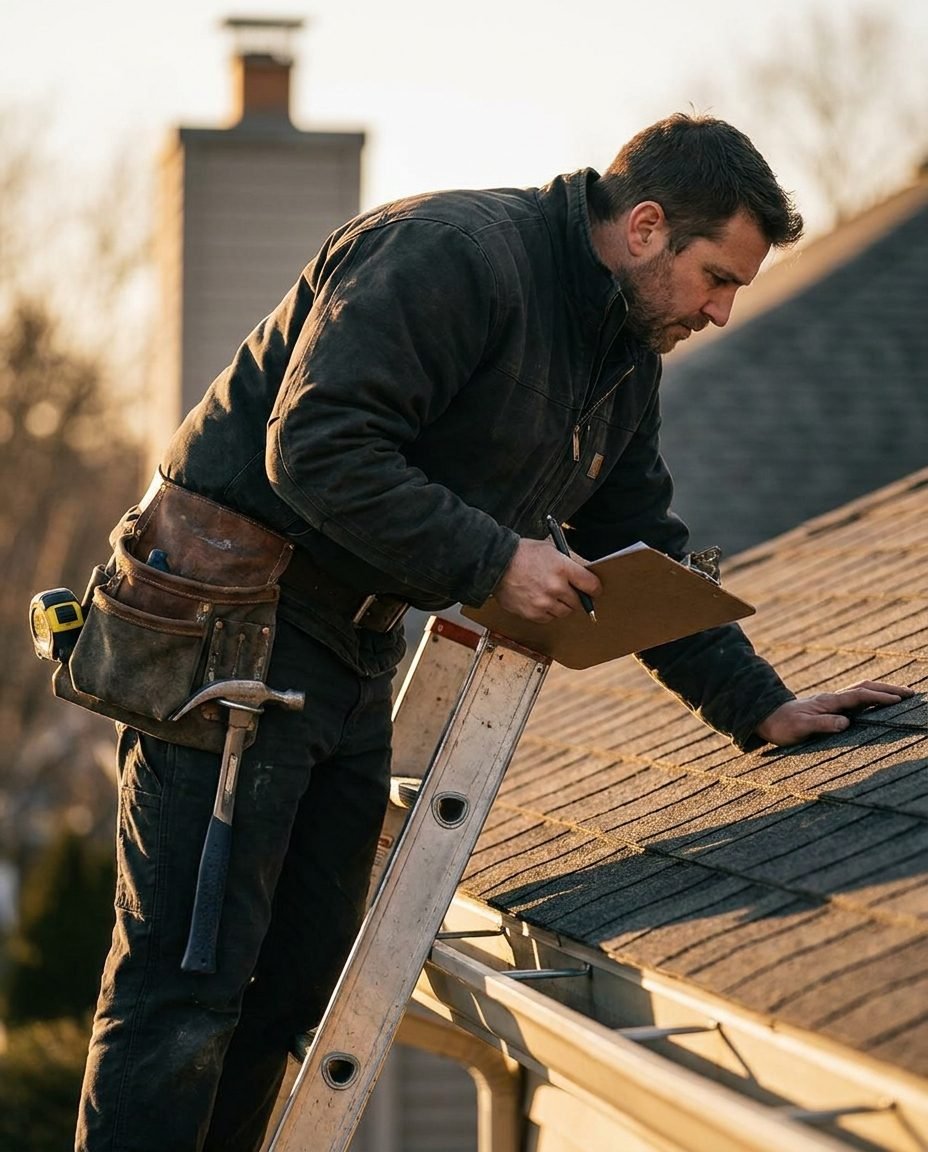
Keep the next step concrete.
- ✓If your HOA or municipality restricts dumpsters, resolve approvals before scheduling material delivery.
- ✓Record the date, roof area, and weather or symptom that prompted the question.
- ✓Keep photos, invoices, and written recommendations with the roof file.
- ✓Ask when the issue needs professional roof access instead of ground-level monitoring.
Roof replacement process
Project logistics belong in the scope because access and disposal affect cost, safety, and the homeowner's experience.
Explore the serviceTurn the answer into a roof decision.
Use the related service pages for a property-specific conversation, then keep learning with the guides that answer the questions homeowners ask before they call.