How to Spot Hail Damage on Your Roof (Before It's Too Late)
Hail damage rarely looks like what people expect — here's what it actually looks like, and why it's easy to miss.
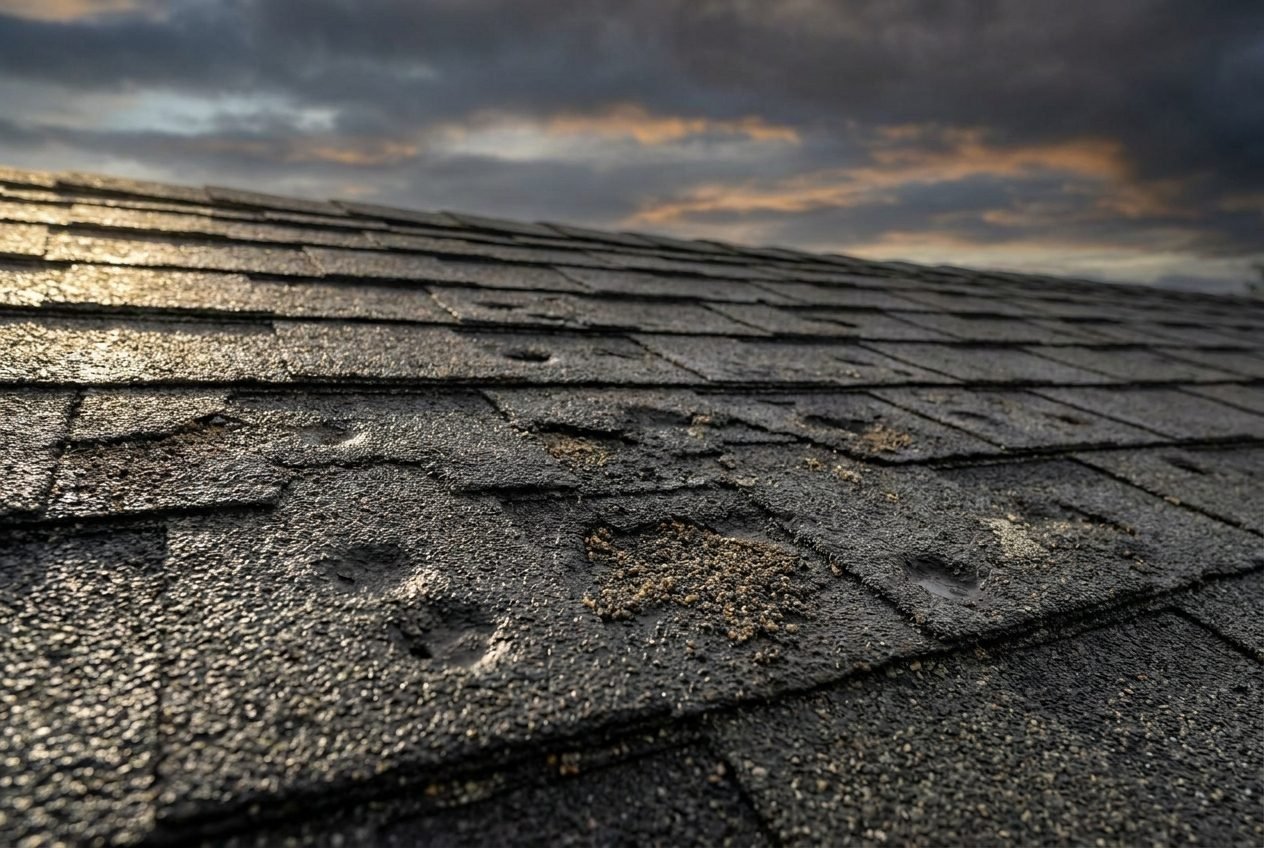
What hail damage actually looks like
Hail rarely punches visible holes in asphalt shingles the way people expect. More often, it bruises the shingle — compressing the mat underneath the granule surface without fully penetrating it — which shows up as small dark spots, granule loss in a scattered or clustered pattern, and a soft or spongy feel when pressed. This kind of damage compromises the shingle's ability to shed water over time, even though it doesn't look dramatic.
Metal roofing shows hail impact differently — as visible dents or dimpling — which is more obvious but doesn't always affect function the way asphalt bruising does.
Where to look and why it's easy to miss
Hail damage typically concentrates on roof slopes facing the direction the storm traveled from, and on softer metal components — gutters, downspouts, vent caps, and window screens — often show hail impact more visibly than the shingles themselves. Checking these secondary surfaces from the ground is actually one of the more reliable ways homeowners can get a preliminary read on whether a storm was severe enough to warrant a professional roof inspection.
Why timing matters for documentation
Hail bruising doesn't heal, but it does become harder to date-stamp as time passes and weather continues to affect the roof surface. If multiple storms occur over a season, distinguishing which storm caused which damage becomes genuinely difficult — which is exactly the kind of ambiguity that can complicate an insurance claim. Getting an inspection promptly after a significant hail event is the best way to keep documentation clean.