Roof Insurance Damage Documentation in North Indy
Good claim documentation describes the roof as it is, with dates, locations, photos, measurements, and a clear separation between storm damage and older wear. It does not promise a coverage outcome.
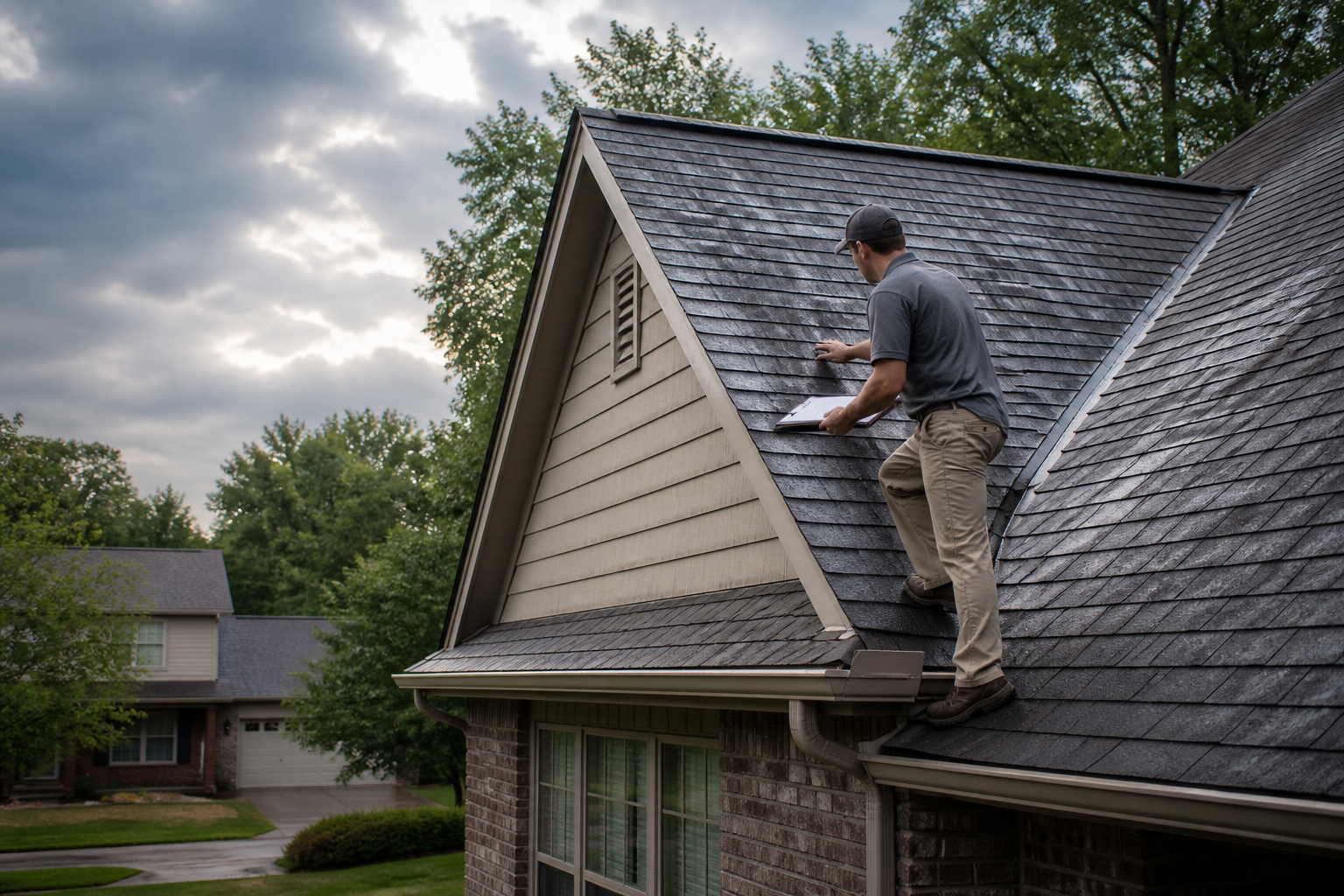
Roof insurance damage documentation is a photo-backed record of roof and exterior conditions after a suspected covered event. It may include roof elevations, damaged components, measurements, temporary protection, and a line-item repair or replacement scope.
What a useful report records
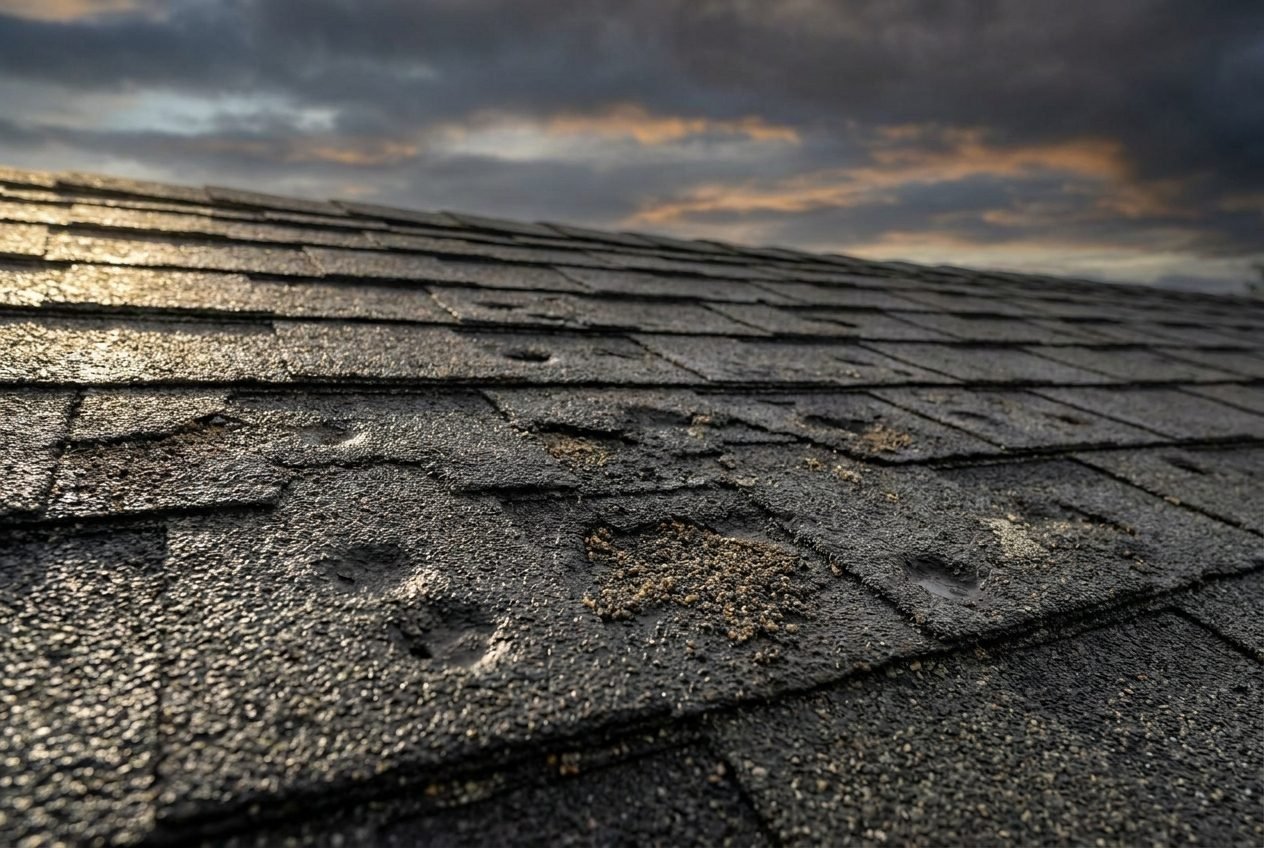
Start with the weather event or discovery date, then organize photos by roof elevation and component. Note missing or lifted shingles, hail impacts, damaged soft metals, torn flashing, exposed underlayment, interior leaks, and temporary measures.
Context matters. A close-up of one mark is less useful than a photo that shows where it sits on the roof, followed by a closer image that shows the condition. Record unaffected areas when they help explain the pattern.
Separate damage from maintenance
Roofs can have storm damage and pre-existing wear at the same time. A report that calls everything storm damage is less credible than one that identifies both. Older algae, brittle edges, previous patches, and long-term flashing failure should be described honestly.
The physical report and the policy decision are different things. We can describe what is present and build a scope; your insurer determines coverage based on the policy, cause, exclusions, deductible, and claim process.
How scopes and supplements work
A first scope may change when concealed decking, code-required work, or additional damage becomes visible. The change should be documented with photos, measurements, and an explanation of why it was not known earlier.
Homeowners should keep every version of the estimate, the adjuster's report, material invoices, and final completion photos. A clean record reduces confusion when different parties are discussing different roof areas.
Avoiding common claim mistakes
Do not sign an assignment or authorize unnecessary work because a storm chaser says the claim is guaranteed. Do not make permanent repairs that destroy evidence before the condition is documented. Do protect the home from additional damage when water is entering.
If you are unsure, request a written inspection and ask direct questions: what is damaged, what is repairable, what is excluded from this scope, and what would change the recommendation?
A better roof decision starts with a visible scope.
- ✓Date the event and organize photos by roof area
- ✓Describe both storm-created damage and pre-existing wear
- ✓Keep estimates, supplements, invoices, and completion photos
- ✓Protect the home without destroying claim evidence
Turn the answer into a roof decision.
Use the related service pages for a property-specific conversation, then keep learning with the guides that answer the questions homeowners ask before they call.