Chimney Flashing Repair
One of the most common roof leak sources we find — repaired with proper step and counter flashing, not just fresh caulk.
Why chimneys are such a common leak point
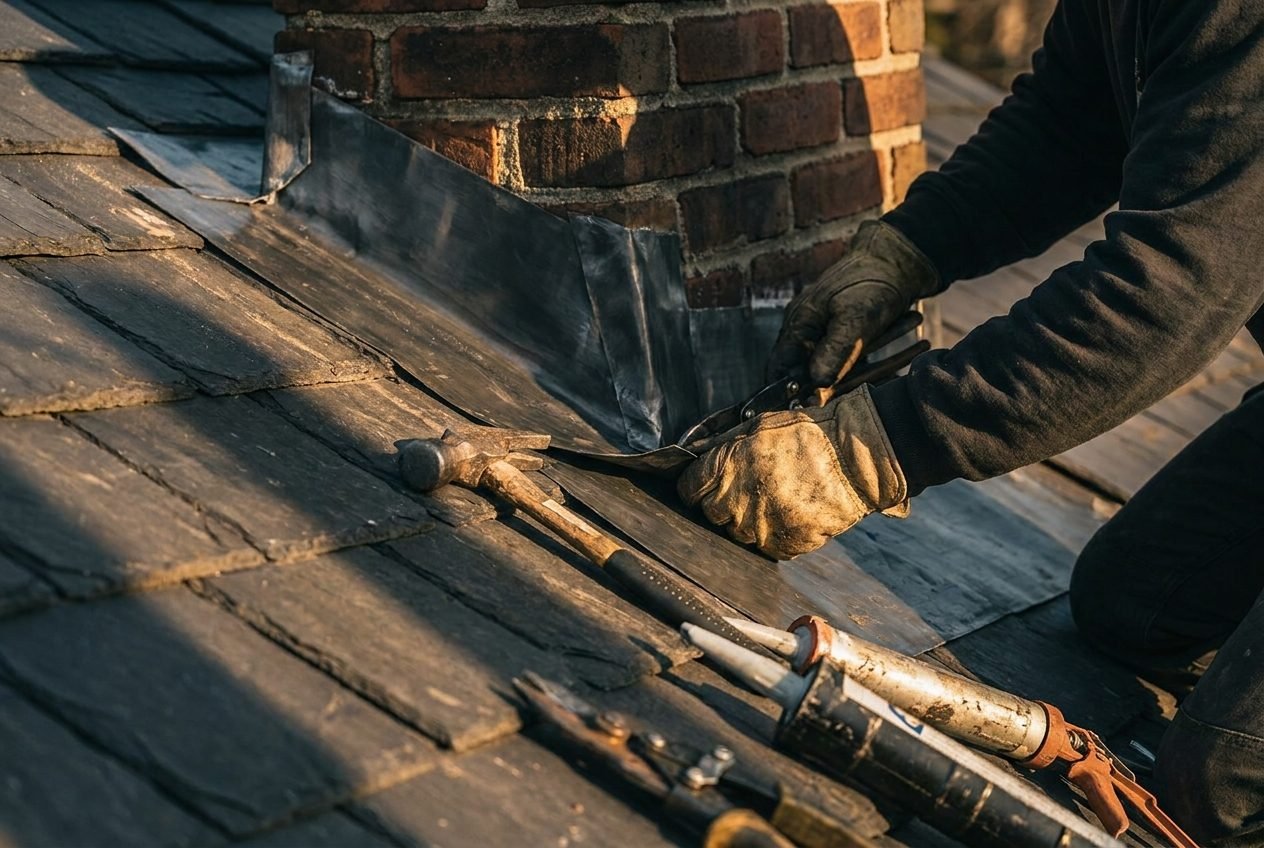
A chimney passes straight through the roof plane, which means it needs its own dedicated flashing system where the masonry meets the shingles — step flashing up the sides, counter flashing set into the mortar joints, and a cricket behind wider chimneys to divert water. When any piece of that system fails or was installed as a shortcut, water finds its way in almost immediately.
We see a lot of chimney leaks caused by caulk-only repairs from a previous owner or a previous contractor — sealant that looked fine for a season or two before it cracked and let water back in. Our repairs use proper metal flashing techniques rather than relying on sealant as the primary defense, because sealant is meant to be a backup, not the main line.
How we approach chimney flashing repair
- Proper step and counter flashing, not a caulk-only patch
- Crickets added behind wider chimneys where water tends to pool
- Mortar joint work coordinated when counter flashing needs to be reset into the brick
- Straight talk on whether a repair is enough, or whether the chimney itself needs attention
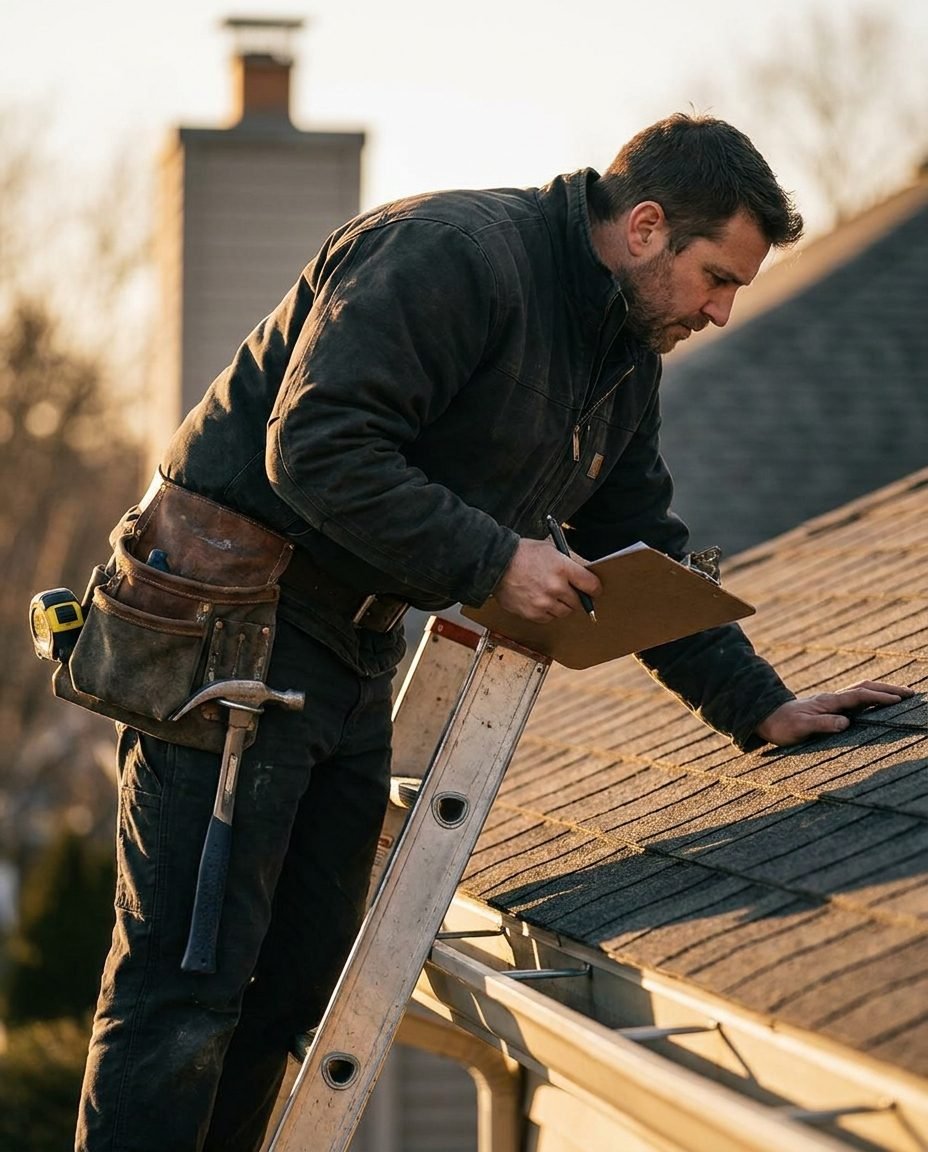
Chimney flashing repair, step by step.
Leak tracing
We confirm the chimney is the actual source before quoting, since interior stains near a chimney don't always originate there.
Flashing assessment
Existing step flashing, counter flashing, and any cricket are inspected for damage or missing pieces.
Repair or full reflash
Depending on condition, we repair specific failed sections or fully reflash the chimney.
Sealant as backup, not primary
Sealant is applied at appropriate joints as a secondary layer, not as the main water barrier.
Follow-up check
We confirm the repair holds through the next rain event.
Masonry and roofing work together here
Chimney flashing repair sits right at the intersection of roofing and masonry work. In some cases, counter flashing needs to be cut into a fresh mortar joint for a proper seal, which is a step that gets skipped by roofing crews without masonry experience — and it's a step we don't skip.
Older chimneys, particularly on the century-old housing stock found in Broad Ripple, Meridian-Kessler, and Nora, often have flashing that was never brought up to modern standard through decades of small repairs. We factor that history into the repair rather than assuming a standard modern flashing kit will fit as-is.