Attic Insulation and Roof Ventilation: What Has to Work Together
Insulation and ventilation are often discussed separately, but they share the same roof cavity. Blocking intake with insulation or venting conditioned air into the attic can create moisture and heat problems.
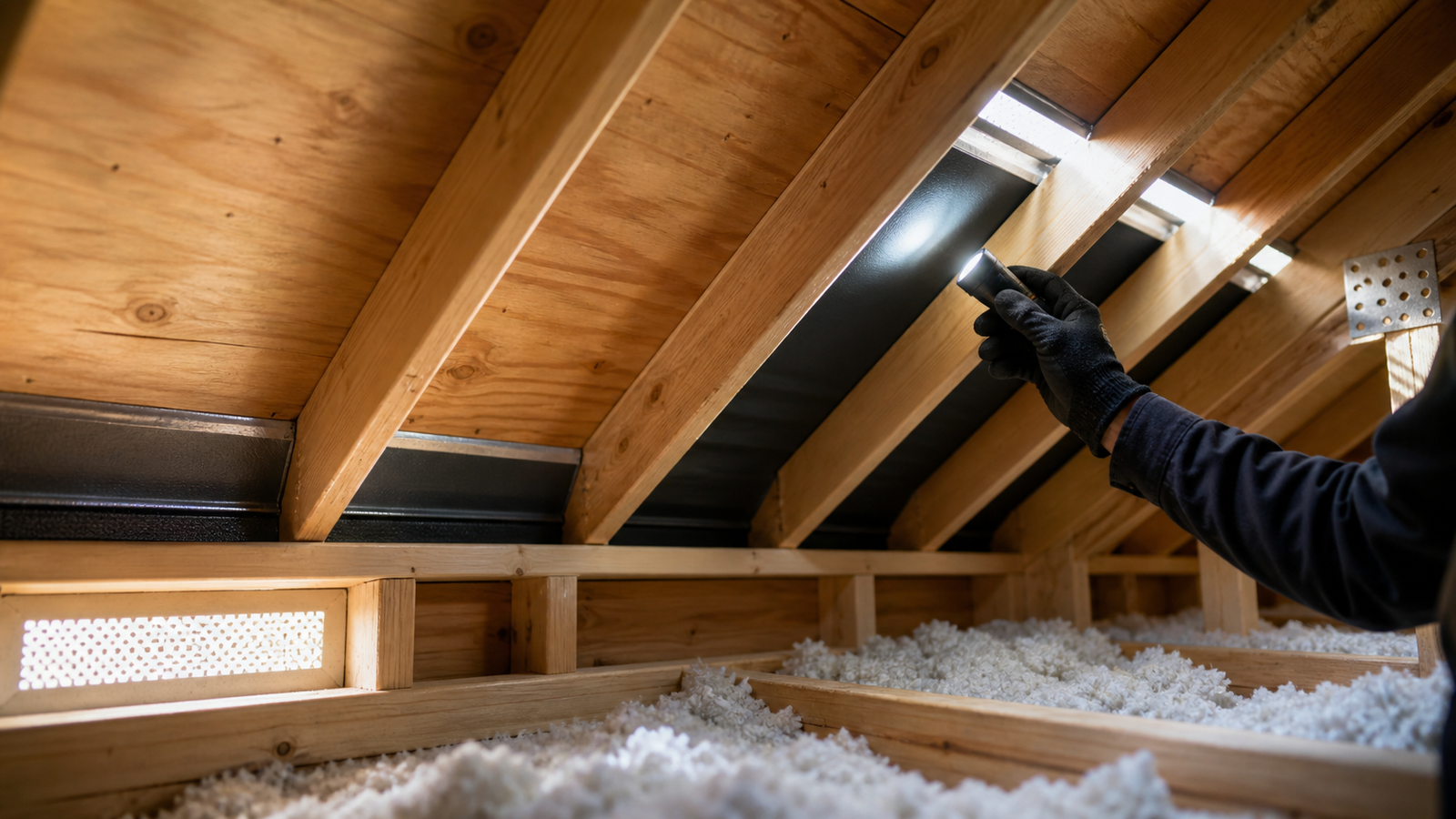
Attic insulation slows heat transfer; roof ventilation helps move air through a designed path. Neither should be evaluated from a single temperature reading. Look at soffit intake, ridge or other exhaust, insulation depth and placement, air sealing, and moisture sources.
What to look for
The roof symptoms may include premature shingle aging, winter condensation, ice dams, or damp insulation. The interior symptoms may include musty odors, peeling paint, or uneven room temperatures.
Bathroom fans, recessed lights, duct leaks, and attic access panels can change the moisture load. A roofing recommendation should identify when an HVAC or insulation contractor is also needed.
What to do next
Use the checklist below to make the next conversation specific. If the condition is active, unsafe, or connected to a storm, move the inspection up the calendar.
Keep the next step concrete.
- ✓Do not add vents blindly. The correction should preserve the roof's weatherproofing and create a balanced path.
- ✓Record the date, roof area, and weather or symptom that prompted the question.
- ✓Keep photos, invoices, and written recommendations with the roof file.
- ✓Ask when the issue needs professional roof access instead of ground-level monitoring.
Roof vent repair
A joint attic-and-roof review is the most useful starting point when surface and interior symptoms overlap.
Explore the serviceTurn the answer into a roof decision.
Use the related service pages for a property-specific conversation, then keep learning with the guides that answer the questions homeowners ask before they call.