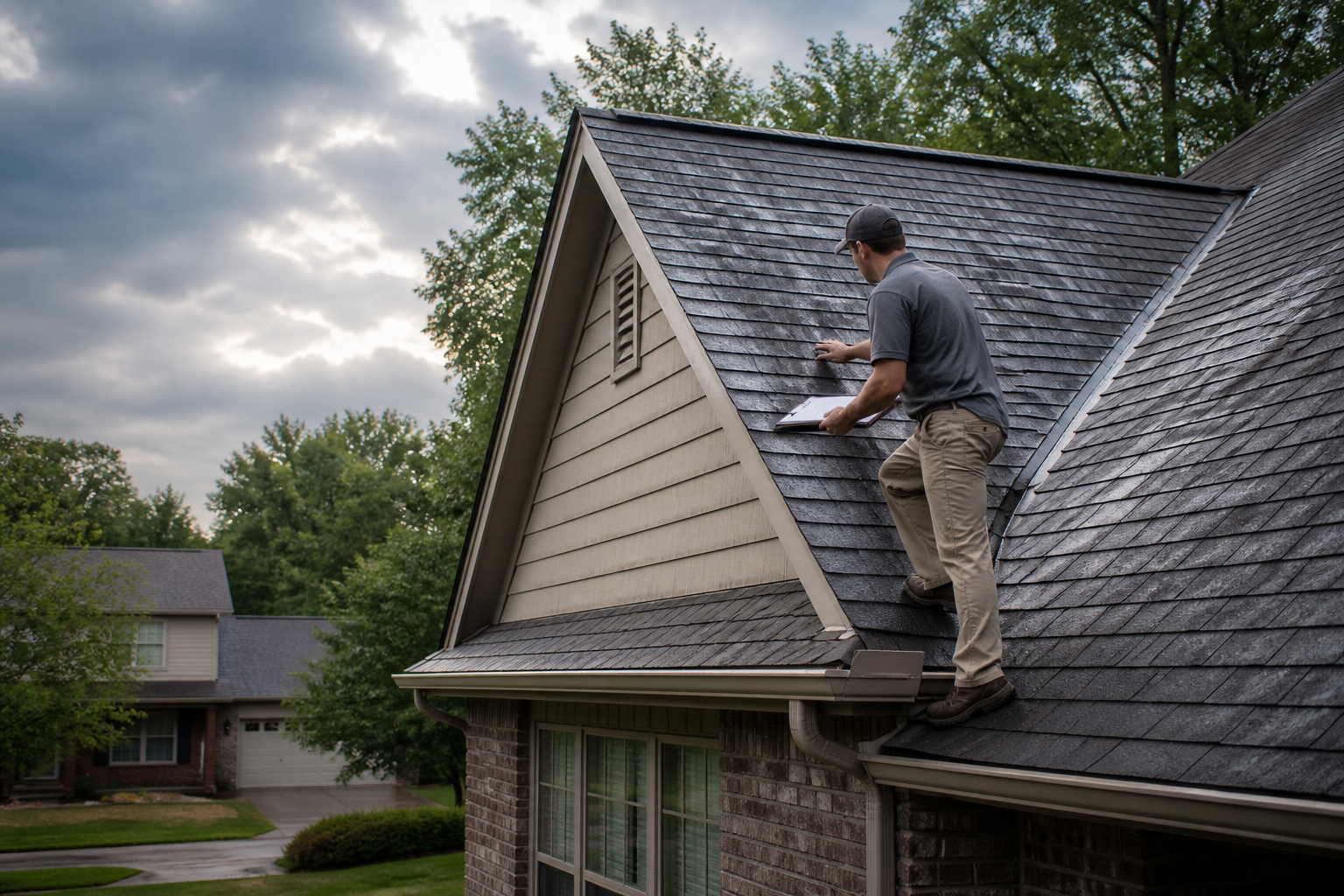
The right order after wind or hail damage
- Make the property safe. Stay off a damaged or wet roof. Keep people away from loose debris, ceiling bulges, and electrical hazards.
- Photograph before disturbing anything. Capture the roof from the ground, fallen branches, damaged vents or gutters, interior stains, and any loose material. Do not risk a ladder climb for a close-up.
- Notify the insurer or agent. Ask for the claim number, required forms, inspection process, deadlines, and rules for temporary versus permanent repairs.
- Prevent additional damage. Tarping, buckets, covering exposed openings, or other temporary measures may be appropriate. Save receipts and photograph the temporary condition.
- Schedule a documented inspection. Ask for a written report or photo set that identifies the areas inspected and separates observed damage from assumptions.
- Compare the scopes. When the contractor and adjuster reports differ, compare roof planes, accessories, quantities, cause, and excluded conditions line by line.
This order follows consumer guidance from the Indiana Department of Insurance claim tips and its winter weather and insurance alert. Your policy still controls the claim.
What the roof inspection should document
| Inspection area | Useful evidence | Why it matters |
|---|---|---|
| Roof covering | Roof plane, slope, material, missing or lifted pieces, bruising, granule loss, creases, and date-stamped context photos. | Shows where the reported condition exists and helps distinguish isolated damage from broad wear. |
| Flashing and penetrations | Chimneys, walls, valleys, skylights, vents, pipe boots, ridge caps, and drip edge. | These details often explain a leak that is incorrectly blamed on a shingle field. |
| Roof drainage | Gutters, downspouts, guards, overflow marks, fascia, and discharge points. | Water-management issues can contribute to damage but may be evaluated differently from storm impact. |
| Attic and interior | Wet insulation, stains, rusted fasteners, darkened decking, drywall, paint, and active moisture. | Connects exterior evidence to the actual path of water into the home. |
| Cause and condition | Storm-related evidence separated from age, installation, maintenance, or prior-repair conditions. | A clear distinction makes the claim conversation more accurate and less adversarial. |
Contractor inspection versus insurance adjuster inspection
The two inspections answer related but different questions. A contractor studies how the roof is built, what needs to be repaired, and how to restore it. An adjuster evaluates the reported loss under a specific policy, including cause, exclusions, deductible, and settlement method.
Neither report should be treated as a universal verdict. Ask each party to identify the exact roof plane, accessory, photo, and policy or scope reason behind a conclusion. If a report says “wear” or “storm damage” without location-specific evidence, ask for clarification.
Questions to ask before signing a repair contract
- Has the insurer inspected the roof, or is this only a contractor recommendation?
- Does the contract authorize emergency protection, permanent repair, or both?
- What happens if concealed decking or interior damage is discovered?
- Who communicates with the adjuster, and what authority does that person have?
- Will the scope show roof planes, quantities, accessories, disposal, and cleanup?
- What is the deductible, and what costs remain the homeowner’s responsibility?
Be cautious with any contractor who guarantees that insurance will pay, tells you to exaggerate damage, or pressures you to sign before you understand the scope. The goal is a defensible record, not a bigger claim.
Understanding ACV, RCV, and depreciation
Settlement language can be confusing. ACV versus RCV explains why an initial payment may not equal the full replacement amount. If your policy includes recoverable depreciation, the carrier may require proof of completed work before releasing the withheld amount; read recoverable depreciation on a roof claim and keep the final invoice, photos, permit records, and completion documents together.
Request a documented inspection in North Indy
North Indy Roof Co. provides storm and hail inspections across Hamilton, Boone, Hancock, and Marion County. The useful starting point is a clear inspection record: what was seen, where it was seen, what is urgent, what is temporary, and what should happen next.