Winter Roof Leak Prevention for Indiana Homes
Winter leaks often begin with fall maintenance that never happened: blocked gutters, weak flashing, poor attic airflow, or a roof detail that cannot handle wind-driven rain and melting snow.
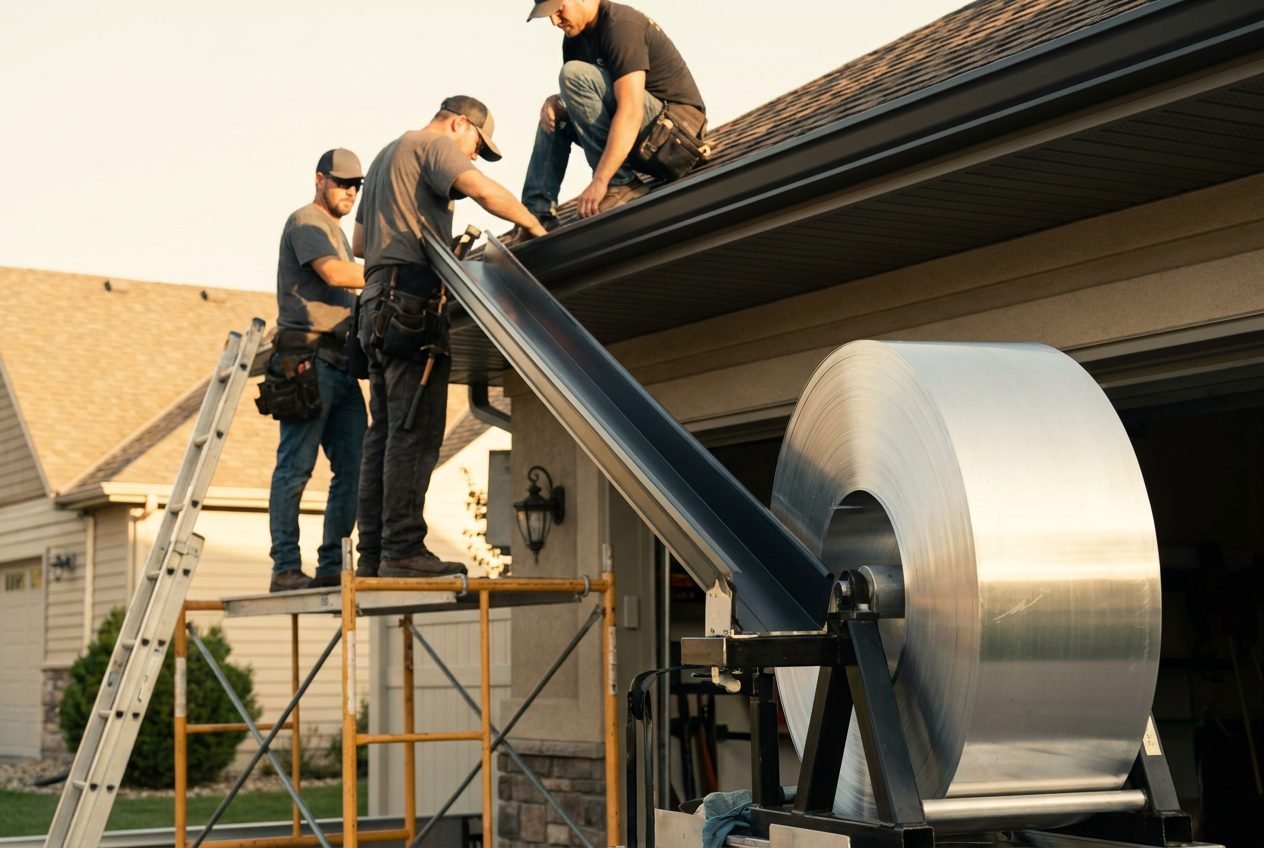
Winter roof leak prevention starts with clear drainage, sound flashing, balanced attic ventilation, and prompt attention to interior moisture. Snow itself is not always the problem; repeated melt and refreeze can move water into weak edges and penetrations.
What to look for
Keep gutters and downspouts clear, watch for ice dams, and check attic insulation around eaves. Do not climb onto icy shingles. If water appears inside, use temporary protection and request a roof inspection.
Bathroom fans should vent outside, not into the attic. Warm moist air can condense on cold roof decking and look like a roof leak even when the exterior covering is intact.
What to do next
Use the checklist below to make the next conversation specific. If the condition is active, unsafe, or connected to a storm, move the inspection up the calendar.
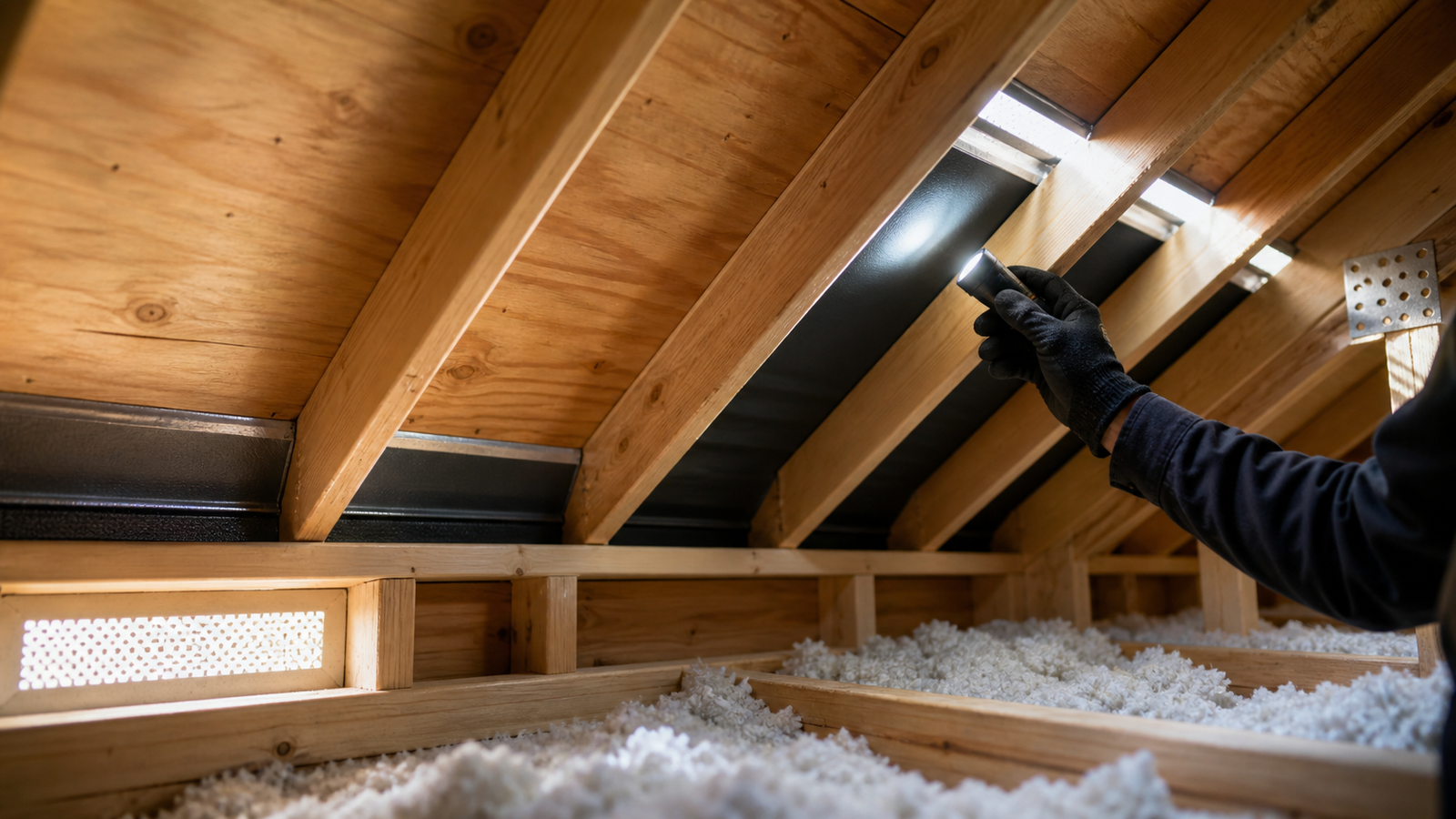
Keep the next step concrete.
- ✓A roof inspection before winter is especially useful for older homes, shaded slopes, and properties with recurring ice dams.
- ✓Record the date, roof area, and weather or symptom that prompted the question.
- ✓Keep photos, invoices, and written recommendations with the roof file.
- ✓Ask when the issue needs professional roof access instead of ground-level monitoring.
Roof vent repair
The durable fix may involve flashing, ventilation, insulation clearance, drainage, or a combination of those details.
Explore the serviceTurn the answer into a roof decision.
Use the related service pages for a property-specific conversation, then keep learning with the guides that answer the questions homeowners ask before they call.