Gutter Replacement and Roofline Water Management
A roof can shed water correctly and still damage the house if the gutters are undersized, sagging, leaking at seams, or discharging beside the foundation. Gutter replacement is a roofline decision, not just a cosmetic upgrade.
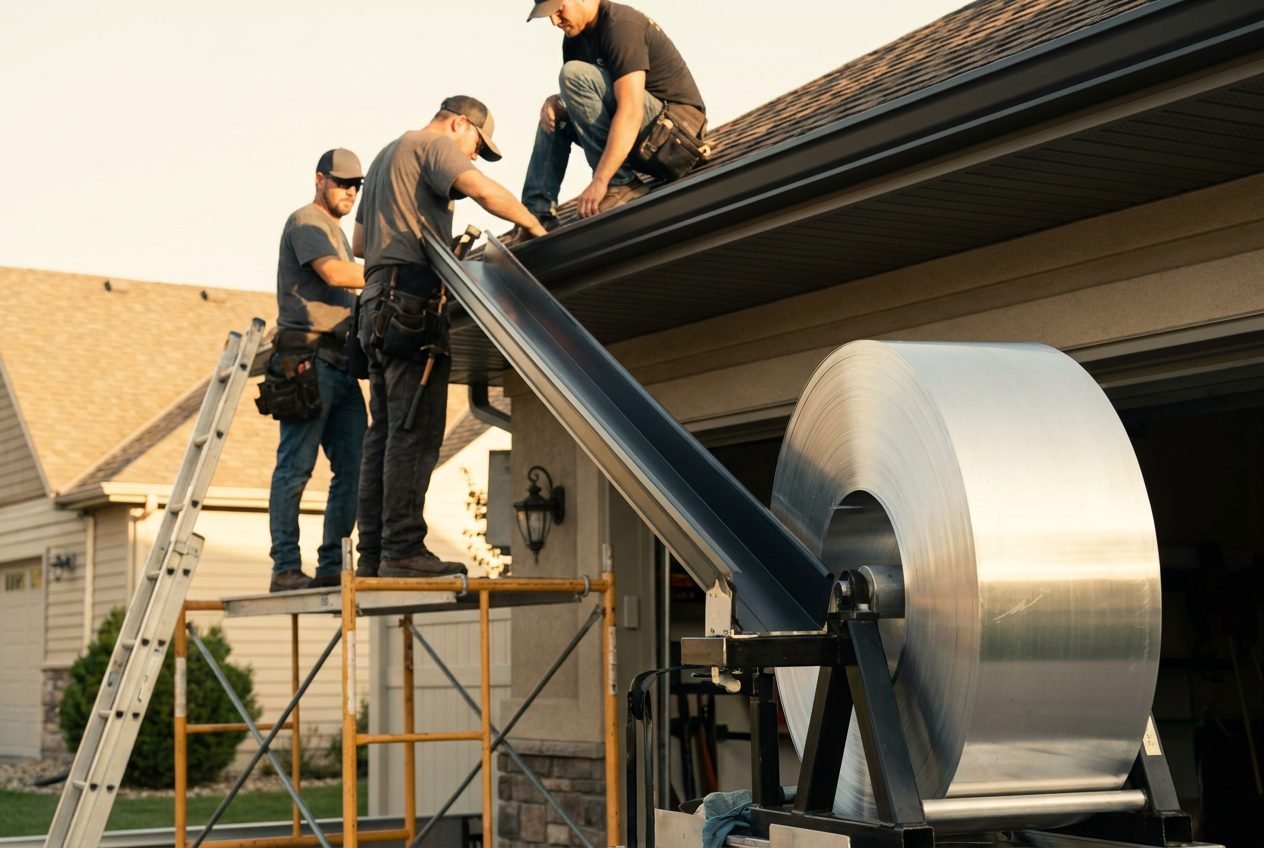
Gutter replacement removes failing gutters and installs a properly pitched, securely supported system with outlets, downspouts, corners, and discharge paths sized for the roof area and site. The goal is to move water away from the roof edge, siding, and foundation.
Signs the system is past a simple cleaning
Persistent leaks at seams, sagging runs, rust-through, separated end caps, overflowing corners, and water marks on fascia usually point toward repair or replacement rather than another cleaning. Gutters that pull away from the fascia can also expose the roof edge to wind and water.
Look at what happens during rain, not only on a sunny day. Water should flow to the downspouts without spilling over the front edge or collecting behind the gutter.
Sizing and layout matter
The right gutter profile, outlet placement, downspout count, and extension length depend on roof area, roof pitch, valley concentration, and how water moves across the lot. A long run with one small downspout can fail even when the gutter material is high quality.
Corners below valleys deserve special attention because they receive more water than a quiet eave. The installation should also account for trees, ice, fascia condition, and access for future cleaning.
How gutters protect the rest of the house
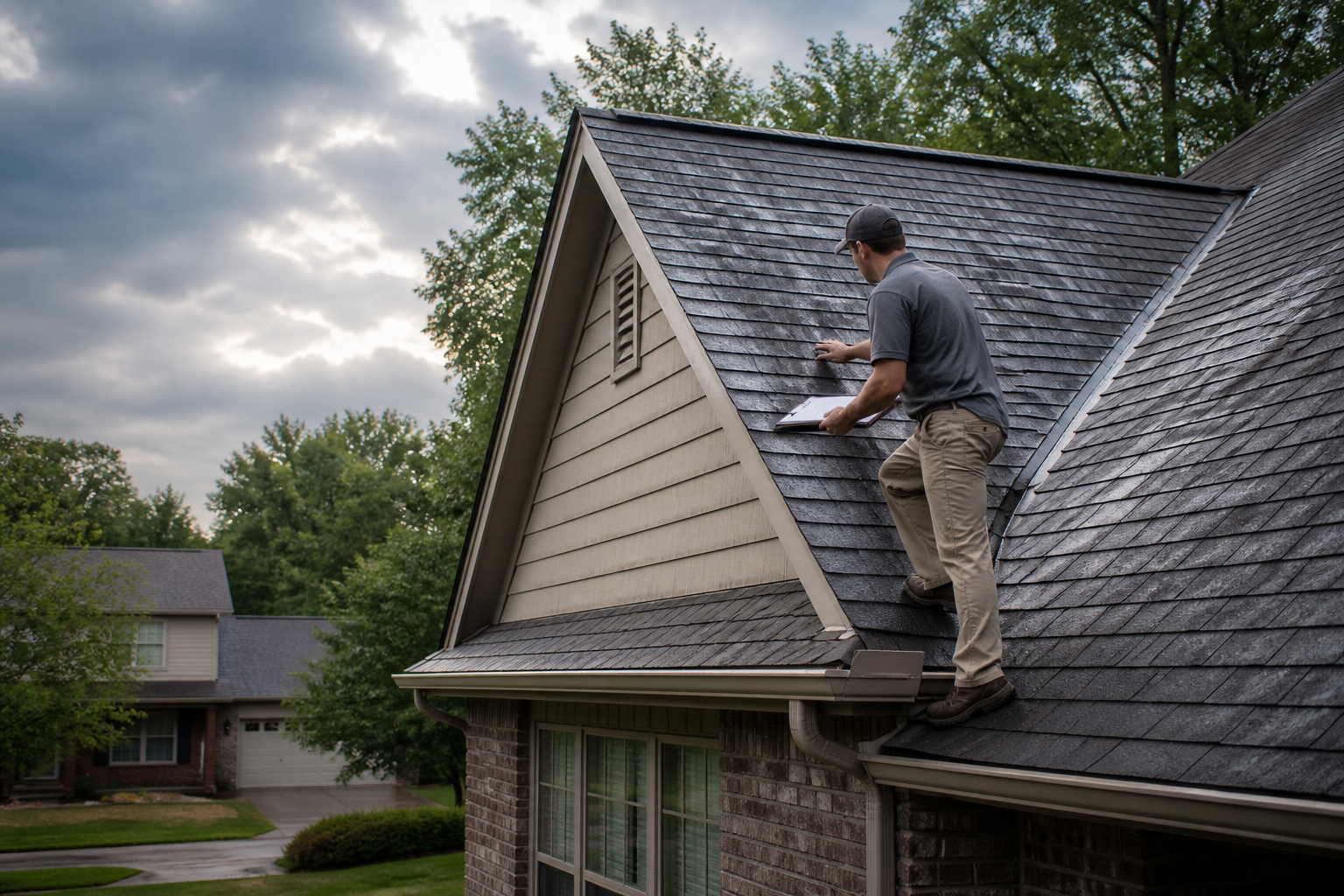
Controlled discharge protects fascia, soffit, siding, foundation planting, basement walls, and walkways. A downspout that ends beside the foundation simply transfers the problem to the ground. Extensions, splash blocks, underground drainage, or grading changes may be part of the water-management solution.
If the roof is being replaced, coordinate gutters after the new eaves and drip edge are set. That helps the two systems work together instead of leaving a new roof connected to an old drainage problem.
Choosing between guards, repair, and replacement
Guards can reduce cleaning but do not correct poor slope, undersized downspouts, or a failing fascia. Repair makes sense when the system is otherwise sound. Replacement is more predictable when several runs are failing or the roofline has changed.
We can inspect the roof edge, fascia, gutters, and discharge path together so you are not buying an accessory for a structural or drainage problem it cannot solve.
A better roof decision starts with a visible scope.
- ✓Check gutter slope, supports, fascia, outlets, and downspouts
- ✓Design around valleys and high-flow roof areas
- ✓Move discharge away from the foundation
- ✓Coordinate gutter work with roof replacement when possible
Turn the answer into a roof decision.
Use the related service pages for a property-specific conversation, then keep learning with the guides that answer the questions homeowners ask before they call.