Roof Decking Repair and Replacement in North Indy
Roof decking is the structural skin beneath the underlayment and shingles. When it is soft, delaminated, or chronically wet, covering it up creates a new roof with an old problem underneath.
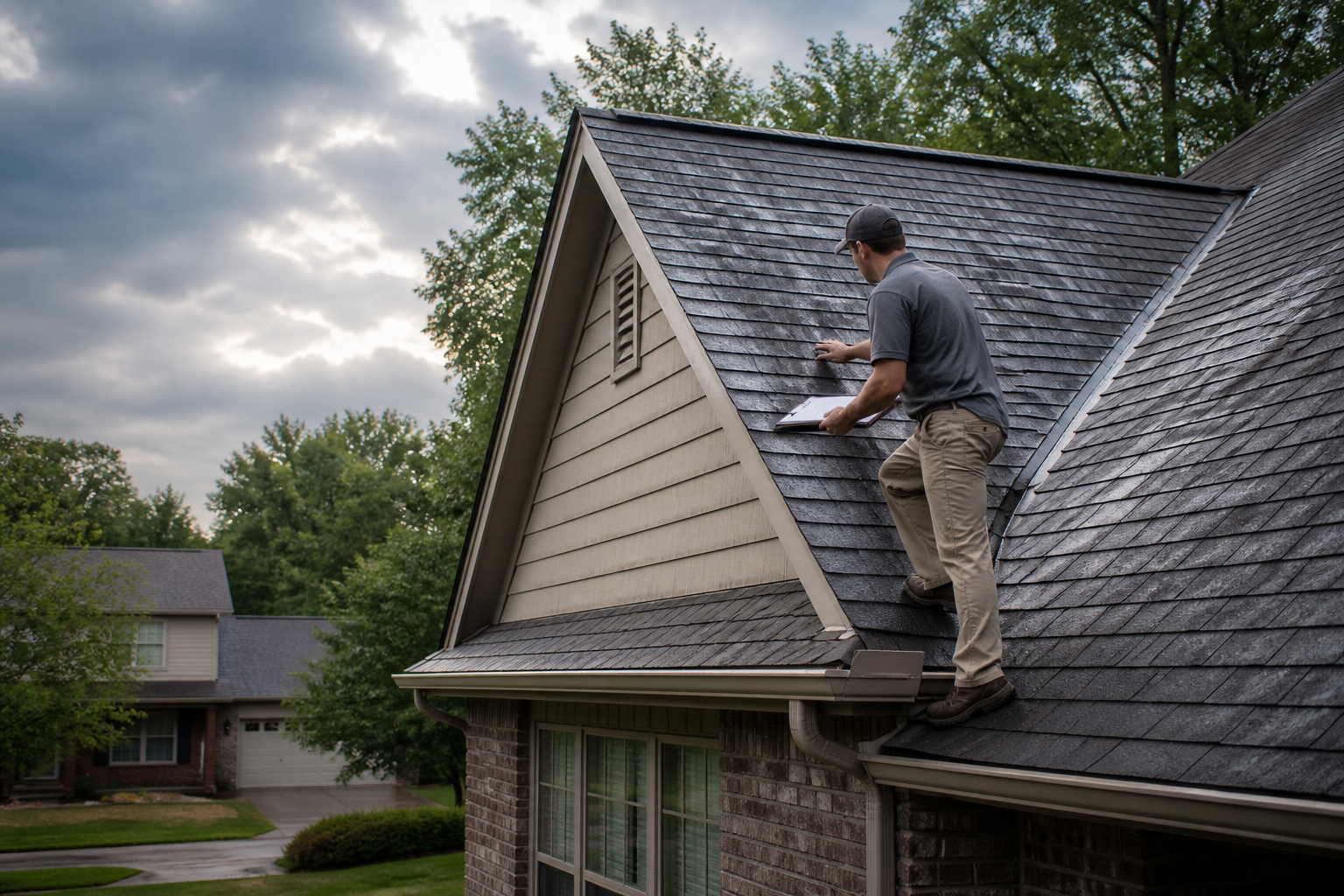
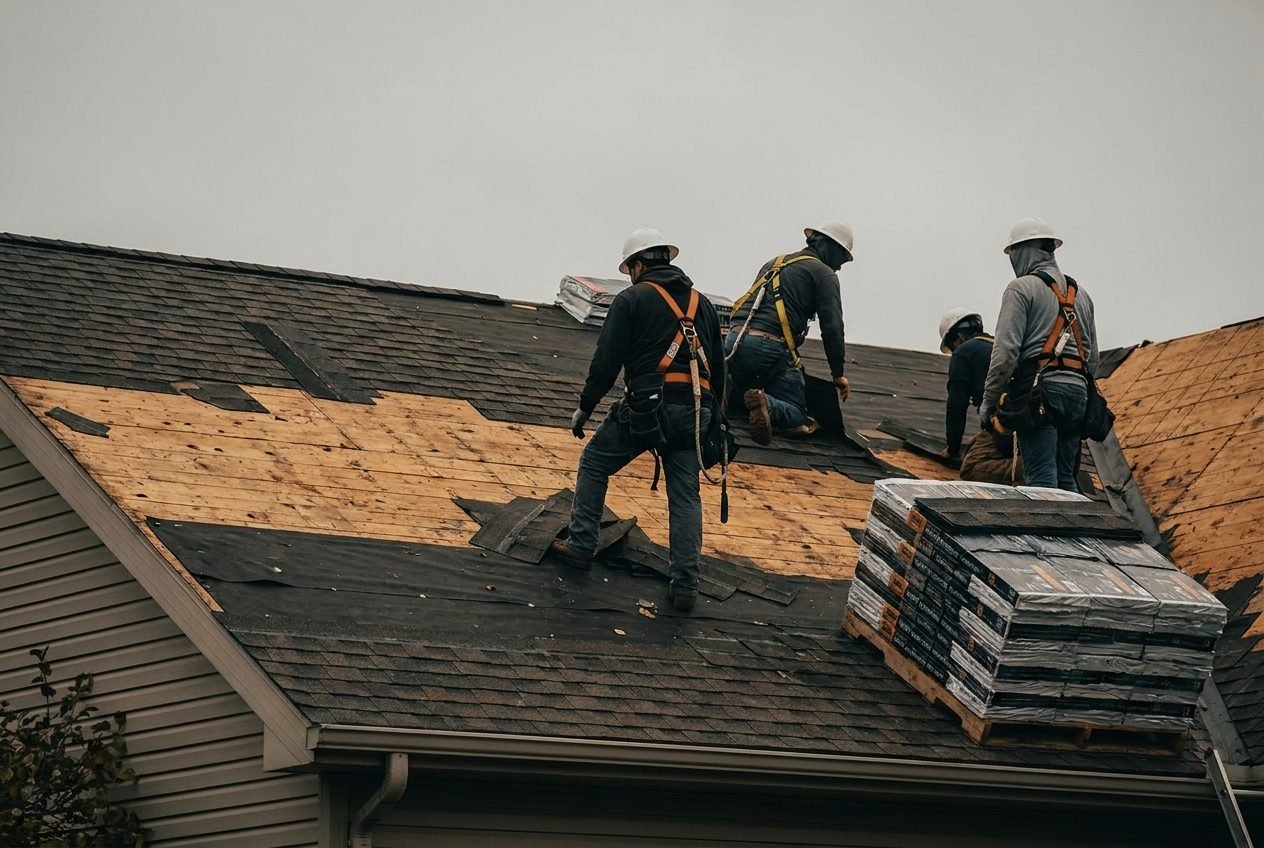
Roof decking repair replaces damaged plywood or oriented strand board so the new roof has a sound, properly fastened surface. The extent of work can only be confirmed when the existing roof covering is opened or when accessible attic evidence clearly shows a problem.
What damages roof decking
Long-term leaks, failed flashing, poor attic ventilation, condensation, and repeated wetting can weaken decking. Damage may be concentrated around chimneys, valleys, skylights, walls, and roof edges, or it may be spread across a low-ventilated attic.
A small ceiling stain does not tell you how much decking is affected. Water can travel along the underside before appearing inside, while a roof can look dry after weeks of concealed moisture.
How decking is evaluated
During an inspection, we look for sagging, staining, soft areas where accessible, fastener issues, and moisture patterns. During a replacement, the tear-off exposes the surface for direct review. The scope should explain how discovered decking will be measured and priced.
That process protects both sides. Homeowners know what happens when hidden conditions appear, and the contractor has room to correct a structural problem rather than installing over it.
Why a sound deck matters
Underlayment and shingles need a stable, properly fastened base. Weak decking can affect nail holding, create uneven planes, and leave moisture paths that shorten the life of the new roof. Replacing the affected sections is not an upgrade for appearance; it is part of building a reliable roof system.
The repair should also ask why the deck failed. If a leak or ventilation problem caused the damage, correcting only the wood leaves the original cause in place.
How to budget for concealed decking work
No honest contractor can promise the exact number of damaged sheets before the roof is opened. The estimate can, however, show a clear per-sheet or per-area method, describe acceptable materials, and explain who approves additional work.
If a quote uses a large unexplained allowance, ask for a better method. Transparent contingencies are easier to compare and less likely to become a mid-project argument.
A better roof decision starts with a visible scope.
- ✓Decking is assessed from attic evidence and during tear-off
- ✓The scope should explain how concealed damage is measured
- ✓Repair the source of moisture as well as the wood
- ✓A sound deck protects fastener holding and roof performance
Turn the answer into a roof decision.
Use the related service pages for a property-specific conversation, then keep learning with the guides that answer the questions homeowners ask before they call.