Downspout Drainage Solutions for North Indy Homes
The last ten feet of a gutter system often decide whether rainwater helps the landscape or finds the foundation. Downspout drainage should be designed around the home's grade, soil, hardscape, and where water already wants to travel.
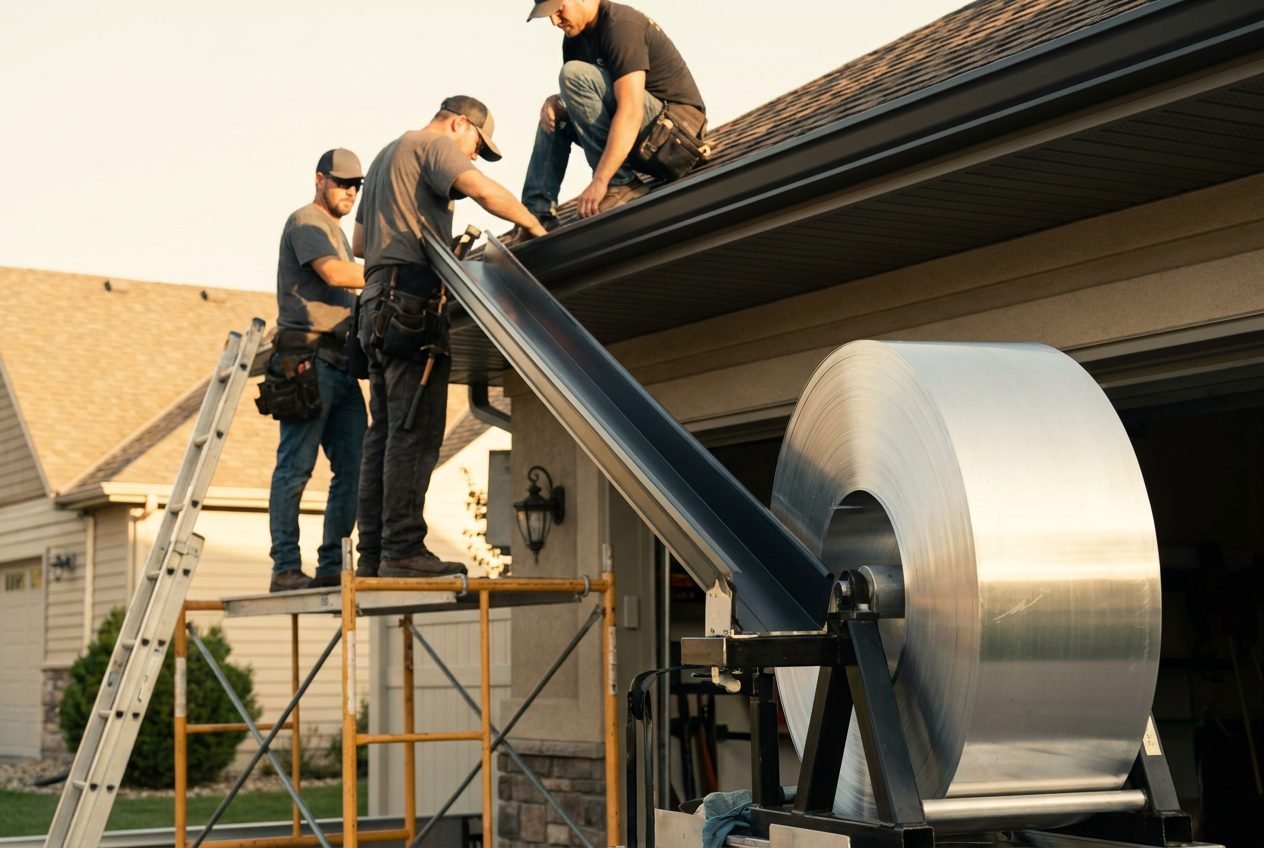
Downspout drainage solutions extend roof runoff away from the foundation using visible extensions, splash blocks, buried lines, pop-up emitters, or coordinated grading. The best option depends on soil, slope, freeze-thaw exposure, landscaping, and the amount of water reaching that downspout.
Start where the water lands
Look for erosion, mulch washout, basement dampness, staining on foundation walls, and puddles that appear beside a downspout after rain. Those clues show whether the current discharge is too close, too concentrated, or blocked.
A long extension laid on the ground may solve one problem and create another if it crosses a walkway or sends water toward a neighbor. Drainage is a site plan, not a universal product.
Visible extensions versus buried drainage
Visible extensions are easy to inspect and maintain, which can make them the right answer for many homes. Buried lines can improve appearance and protect walkways, but they need a real outlet and enough slope or a planned pop-up emitter to prevent standing water.
Before burying a line, verify that the route does not conflict with utilities, irrigation, roots, or frozen ground. A clean-looking installation that cannot be serviced is not a durable fix.
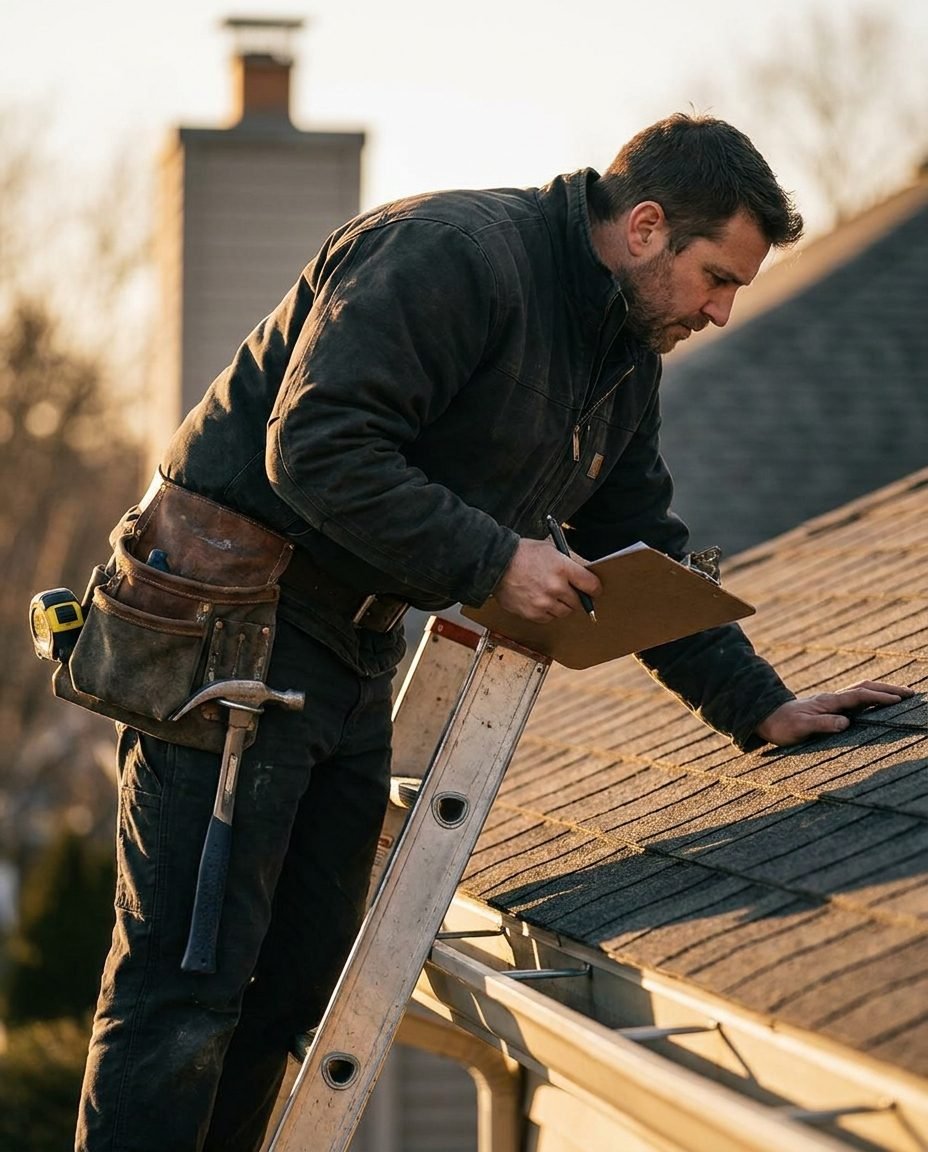
Tie the downspouts to the roof system
Valleys, steep slopes, and large roof areas deliver more water. If the gutter outlets are too small or the downspouts are undersized, moving the bottom farther away will not stop overflow at the top.
We look at the roof edge, gutter capacity, downspout placement, and discharge route together. That makes it easier to decide whether the solution is drainage work, gutter changes, or both.
When a drainage review is worthwhile
Schedule an inspection after a new roof, repeated foundation seepage, gutter replacement, or landscape renovation. The right drainage path can protect the work you have already paid for and reduce the number of wet-weather surprises.
Pair the review with our gutter sizing guide so you can ask practical questions about slope, outlet location, cleaning access, and winter performance.
A better roof decision starts with a visible scope.
- ✓Observe the discharge during real rain
- ✓Choose a route that can be inspected and maintained
- ✓Check roof area and gutter capacity before extending lines
- ✓Keep runoff away from foundations, walks, and neighboring lots
Turn the answer into a roof decision.
Use the related service pages for a property-specific conversation, then keep learning with the guides that answer the questions homeowners ask before they call.