How to Tell an Active Roof Leak From an Old Water Stain
A ceiling mark can be the last visible trace of an old problem—or the first warning that water is moving through the roof again.

An active roof leak usually changes with weather, feels damp, shows fresh discoloration, or has a traceable path in the attic. An old stain is dry and stable, but it still deserves a cause before it is painted over.
What to look for
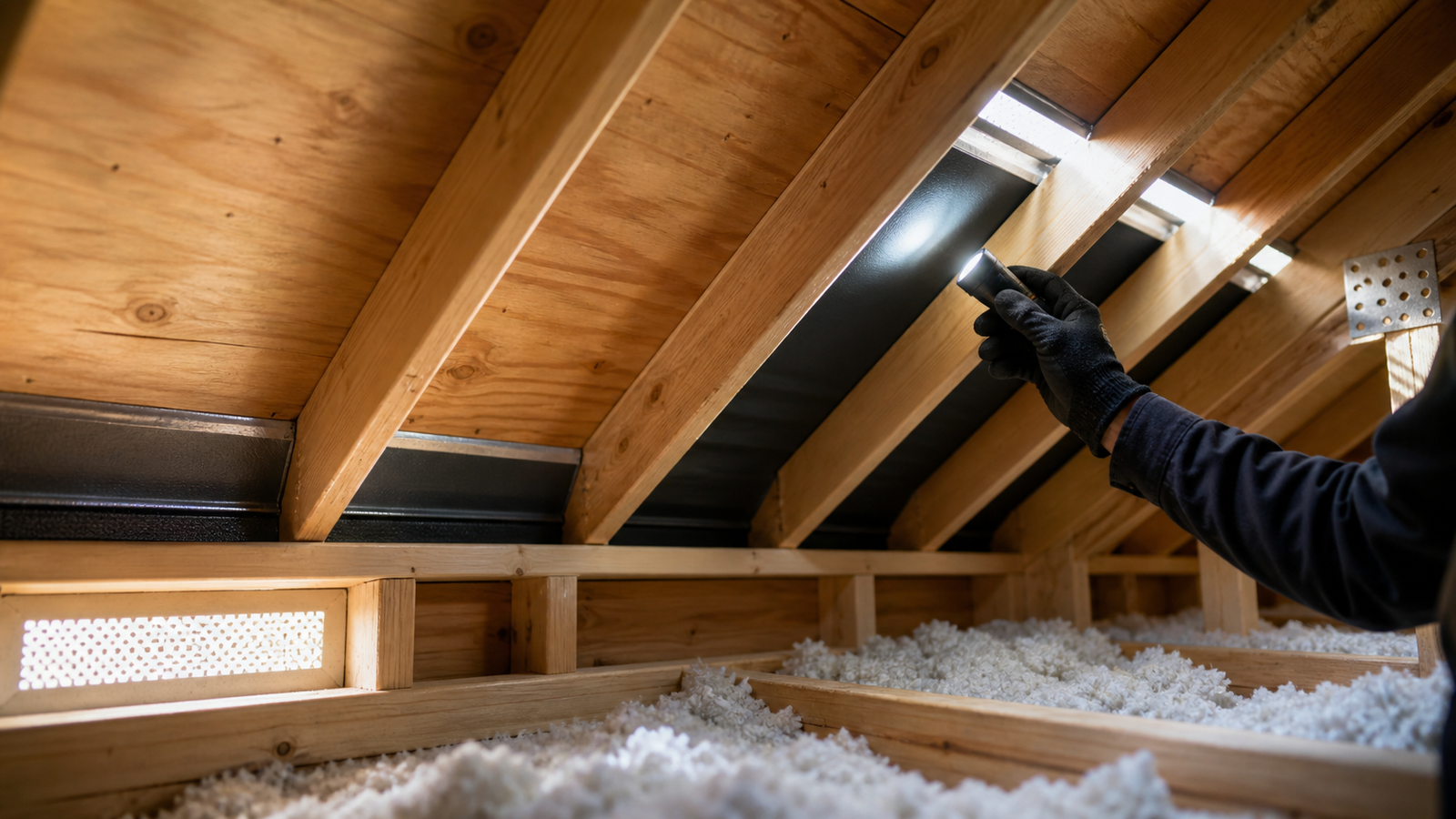
Watch the timing after rain, inspect the attic from a safe location, and photograph edges of the stain. A brown ring that grows, bubbles, or smells must be treated as current until a professional proves otherwise.
Water can travel along decking and framing, so the stain's position is not a reliable map to the roof opening. Chimney flashing, pipe boots, valleys, and wall transitions often sit upslope from the interior symptom.
What to do next
Use the checklist below to make the next conversation specific. If the condition is active, unsafe, or connected to a storm, move the inspection up the calendar.
Keep the next step concrete.
- ✓Do not cut into a ceiling, climb a wet roof, or seal the interior before the source is understood.
- ✓Record the date, roof area, and weather or symptom that prompted the question.
- ✓Keep photos, invoices, and written recommendations with the roof file.
- ✓Ask when the issue needs professional roof access instead of ground-level monitoring.
Roof leak repair
A roof inspection should trace the path, document the roof detail, and separate current moisture from older damage.
Explore the serviceTurn the answer into a roof decision.
Use the related service pages for a property-specific conversation, then keep learning with the guides that answer the questions homeowners ask before they call.