Roof Flashing 101: Where It Fails and Why
Flashing is thin metal doing an outsized job — and it's the source of more roof leaks than shingle failure itself.
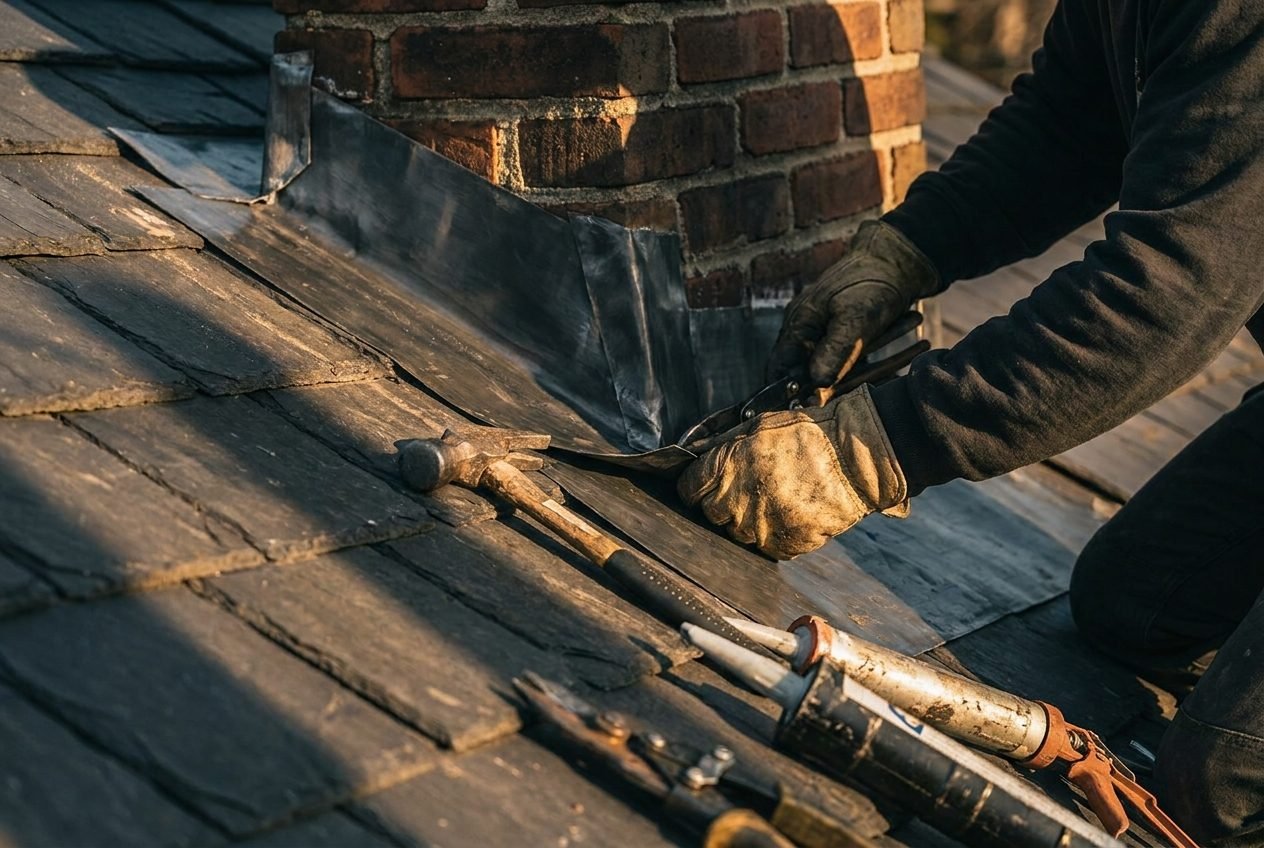
What flashing actually does
Flashing is the metal — usually aluminum, steel, or copper — installed at any point where the roof plane changes direction or is interrupted by a penetration: chimneys, skylights, walls, vents, and valleys. Shingles alone can't seal these transitions reliably, so flashing does the job of directing water around them instead.
The main flashing types
Step flashing is used along vertical surfaces like chimney sides and sidewalls, with individual pieces woven between each shingle course. Valley flashing runs where two roof planes meet at an angle. Counter flashing is set into masonry or siding above step flashing to shed water over it. Each type fails differently, and diagnosing which one has failed is the first step in any legitimate repair.
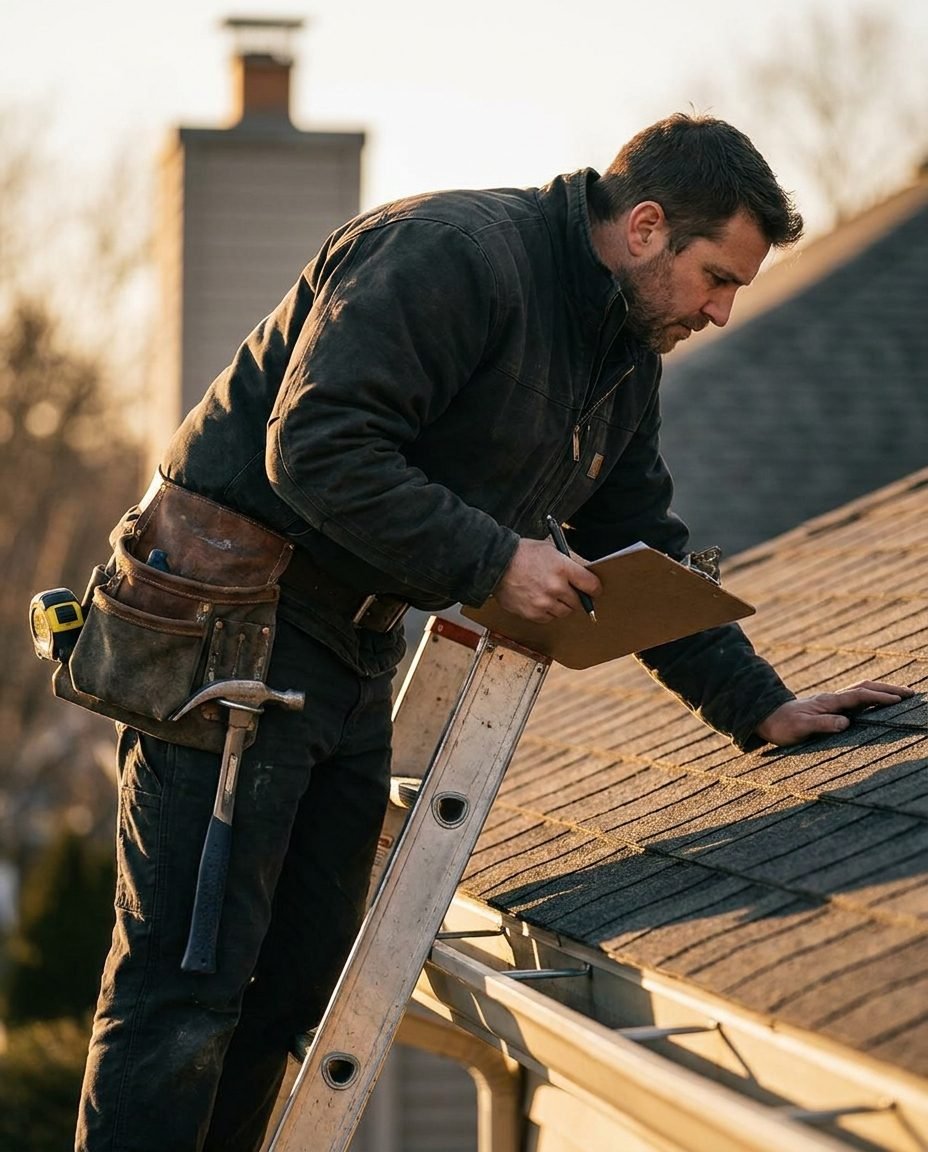
Why flashing fails more often than shingles
Shingles are designed to shed water across a broad, uninterrupted surface; flashing has to manage water at every corner, seam, and transition point, which are inherently the most vulnerable spots on any roof. Thermal expansion and contraction over years of temperature swings also gradually loosens fasteners and sealant at these joints.
What proper flashing repair looks like
A durable flashing repair replaces or reforms the actual metal and re-integrates it with the surrounding shingle courses — sealant is a secondary backup, not the primary fix. Caulk-only repairs are common shortcuts that fail again within a season or two, which is why we see so many repeat callouts on chimneys and skylights that were previously 'fixed' with sealant alone.