Hail Damage Roof Inspection in North Indianapolis
Hail damage can be easy to miss from the driveway and still matter to the roof's long-term performance. The goal of an inspection is to document impact patterns carefully, not to label every dark spot as a claim.
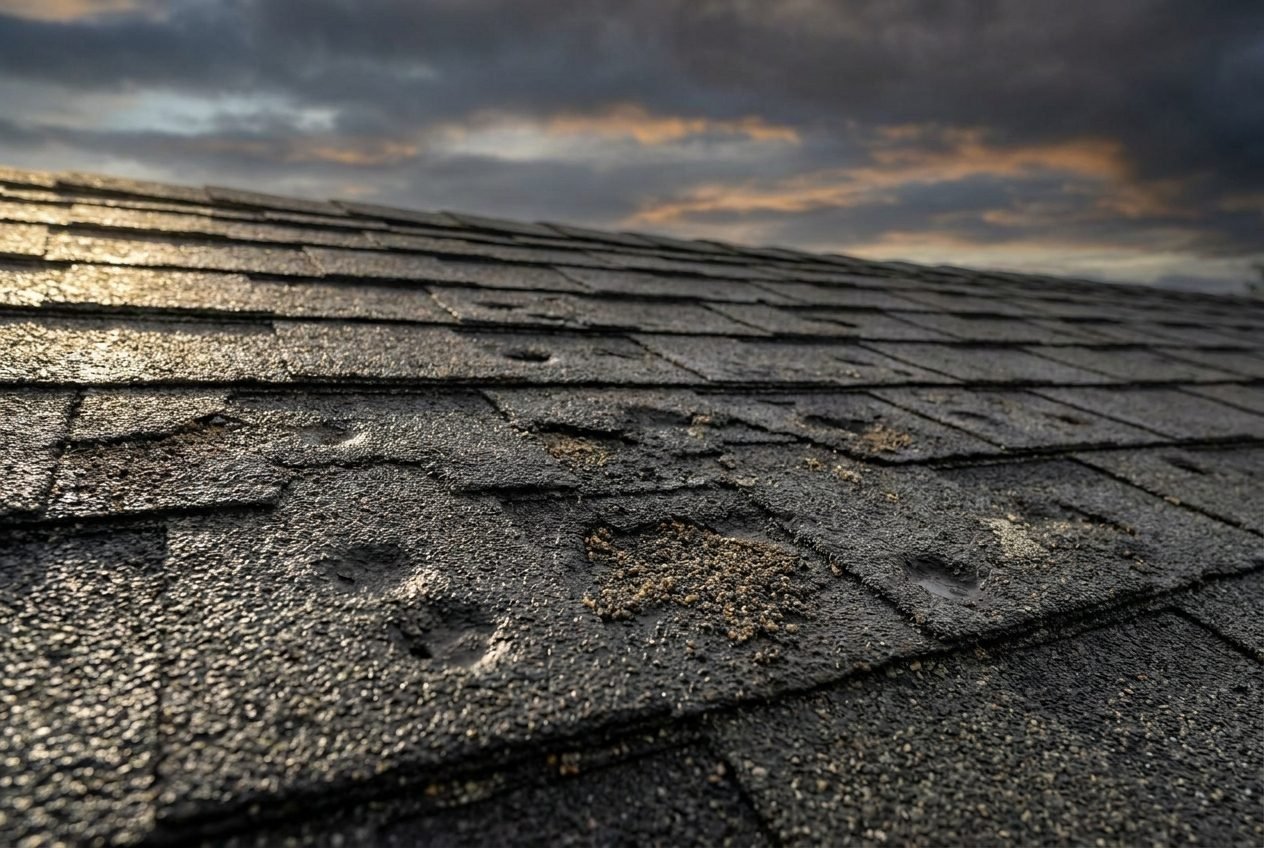
A hail damage roof inspection looks for impact marks, granule loss, exposed matting, damaged vents and soft metals, broken accessories, and related exterior evidence. The report should distinguish storm-created damage from age, algae, manufacturing variation, and prior repairs.
Why hail damage is hard to see
Hail impact can appear as a small bruise, a loss of granules, or a broken seal that does not look dramatic in a wide photo. Dark roof colors and shadows make visual checks even harder. Soft metals around vents, gutters, and flashing often show impact more clearly than the field shingles.
A homeowner's ground-level walkaround is useful for spotting obvious damage, but it cannot confirm the roof surface. Avoid using a ladder or walking on the roof after a storm unless you are trained and equipped to do so.
What a defensible inspection records
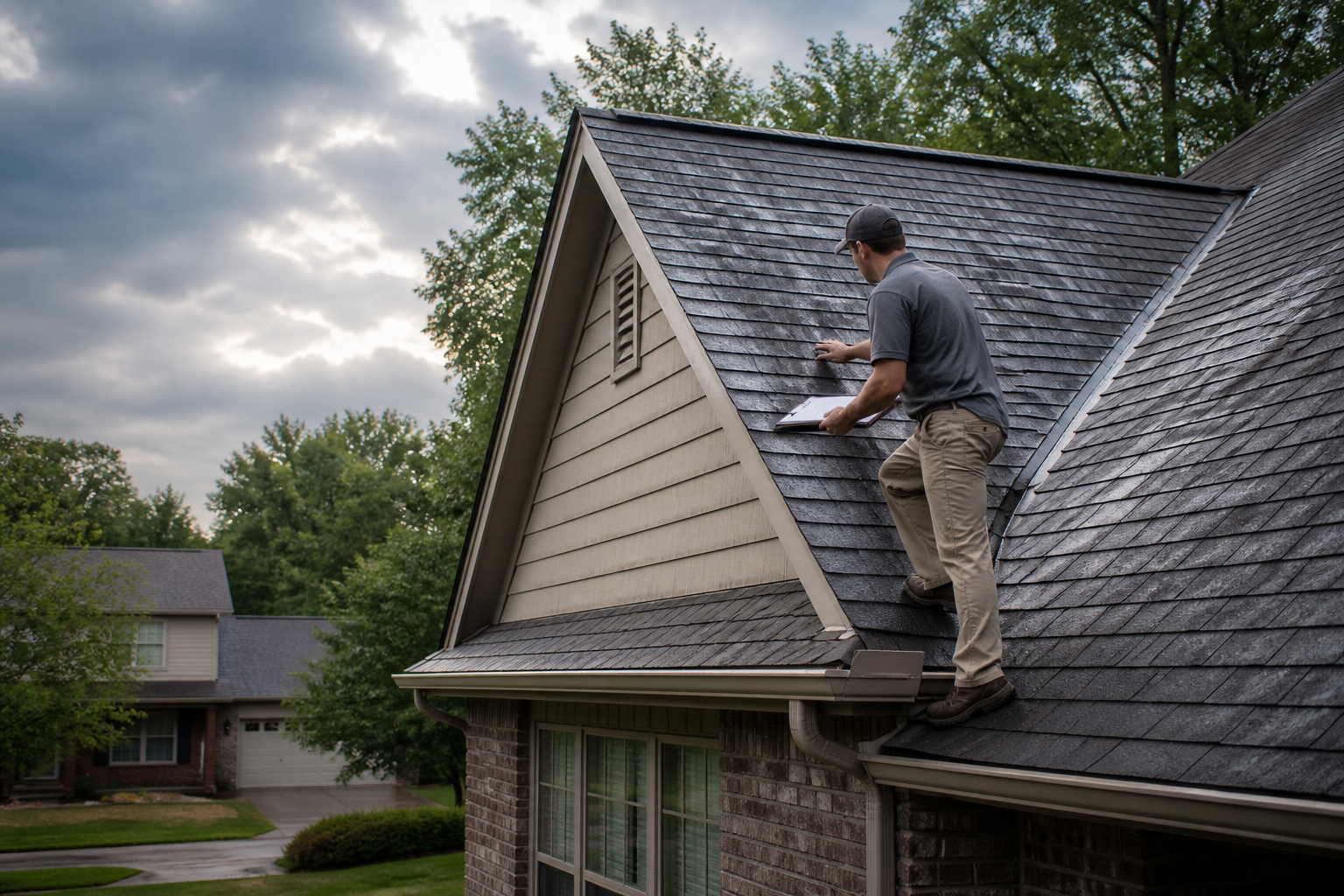
The useful record includes roof elevations, approximate damage distribution, accessory damage, photographs with context, and notes about older wear. It also records what was not damaged. That balance helps a carrier or another contractor understand the inspection rather than treating it as a one-word conclusion.
If the roof has been repaired before, say so. A careful inspection should not promise coverage, a full replacement, or a claim outcome before the evidence and policy are reviewed.
What happens if the damage is confirmed
The next step depends on severity and roof condition. Some damage can be repaired; widespread impact on a newer roof may lead to a replacement discussion; an older roof may require a broader condition assessment. We connect the recommendation to what can actually be restored.
We can help organize photos, measurements, and a line-item scope for an insurance conversation, but your policy and carrier make the coverage decision. Our role is to describe the roof accurately.
The homeowner's best first moves
Photograph the date, weather, exterior debris, and any interior water intrusion. Keep the inspection date and avoid discarding damaged parts before they are documented. If the roof is leaking, prioritize temporary weatherproofing.
Read our storm-damage checklist before meeting a contractor so you know which questions to ask and which promises deserve a second look.
A better roof decision starts with a visible scope.
- ✓Inspect shingles, soft metals, vents, gutters, and other roof accessories
- ✓Record damage patterns and pre-existing wear separately
- ✓Use photos with context, not only close-up circles
- ✓Never treat an inspection as a promise of insurance coverage
Turn the answer into a roof decision.
Use the related service pages for a property-specific conversation, then keep learning with the guides that answer the questions homeowners ask before they call.