Roof Flashing Repair and Replacement
Flashing is the quiet metalwork that keeps water from entering where roof planes meet walls, chimneys, skylights, and other openings. When it fails, another layer of caulk is rarely the durable answer.
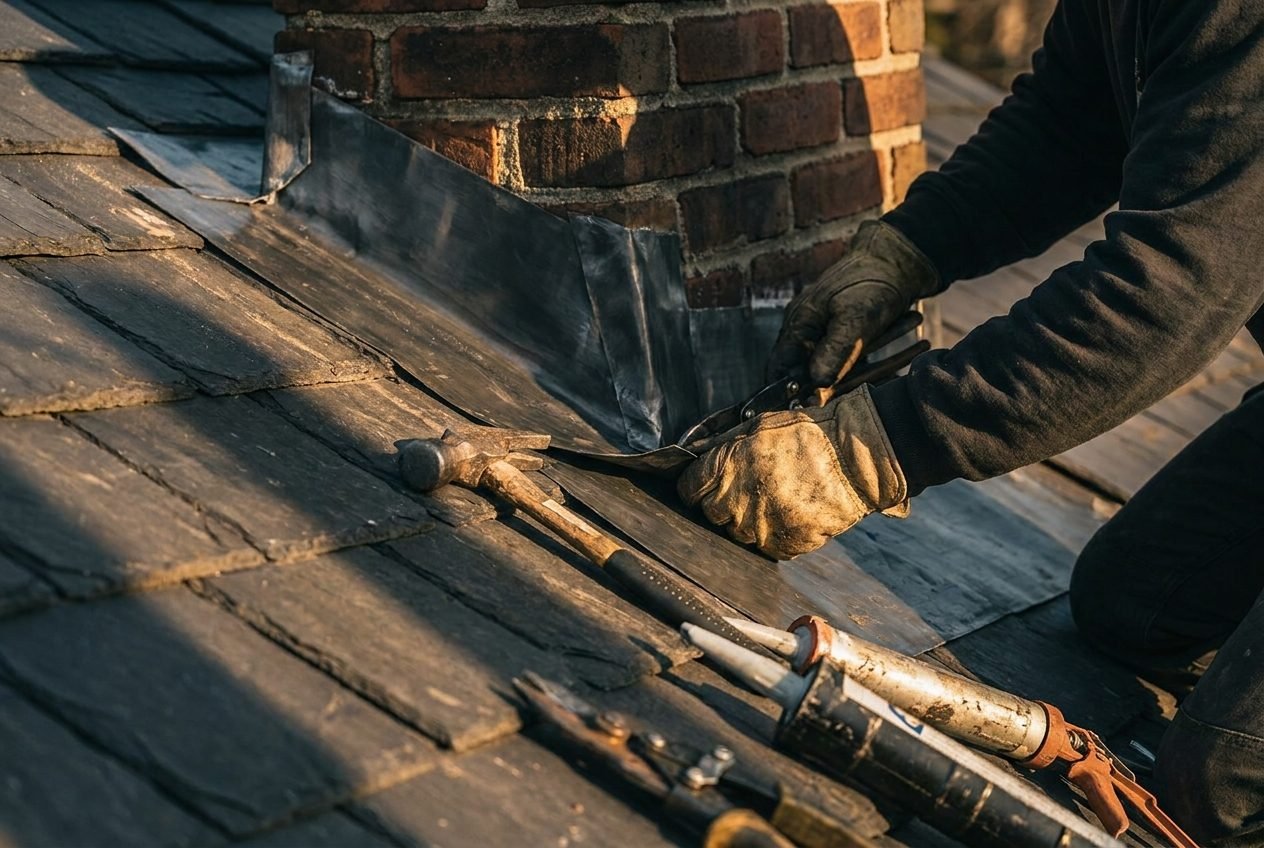
Roof flashing repair corrects failed or missing metal and membrane details at roof transitions and penetrations. The right repair depends on whether the flashing is loose, corroded, incorrectly lapped, buried under old material, or connected to a larger construction problem.
Where flashing does the most work
Step flashing protects the joint between a roof slope and a sidewall. Counterflashing covers the upper edge of a chimney or wall detail. Valley, apron, kick-out, drip-edge, and pipe-boot components manage different water paths. Each detail has a job, and failure in one location can look like a general roof leak.
North Indy homes often combine multiple roof pitches and additions. The more intersections a roof has, the more valuable it is to document each transition rather than treating 'flashing' as one generic line item.
Why caulk-only repairs fail
Sealant can close a small gap, but it does not replace missing step flashing, correct a bad lap, or stop water traveling behind a wall. Sun, movement, freeze-thaw cycles, and wet debris eventually expose a cosmetic repair.
A durable repair opens enough of the area to see how water should move, replaces failed components, and integrates new material with the surrounding roof. That may be smaller than replacement but more involved than a tube of sealant.
How flashing is scoped
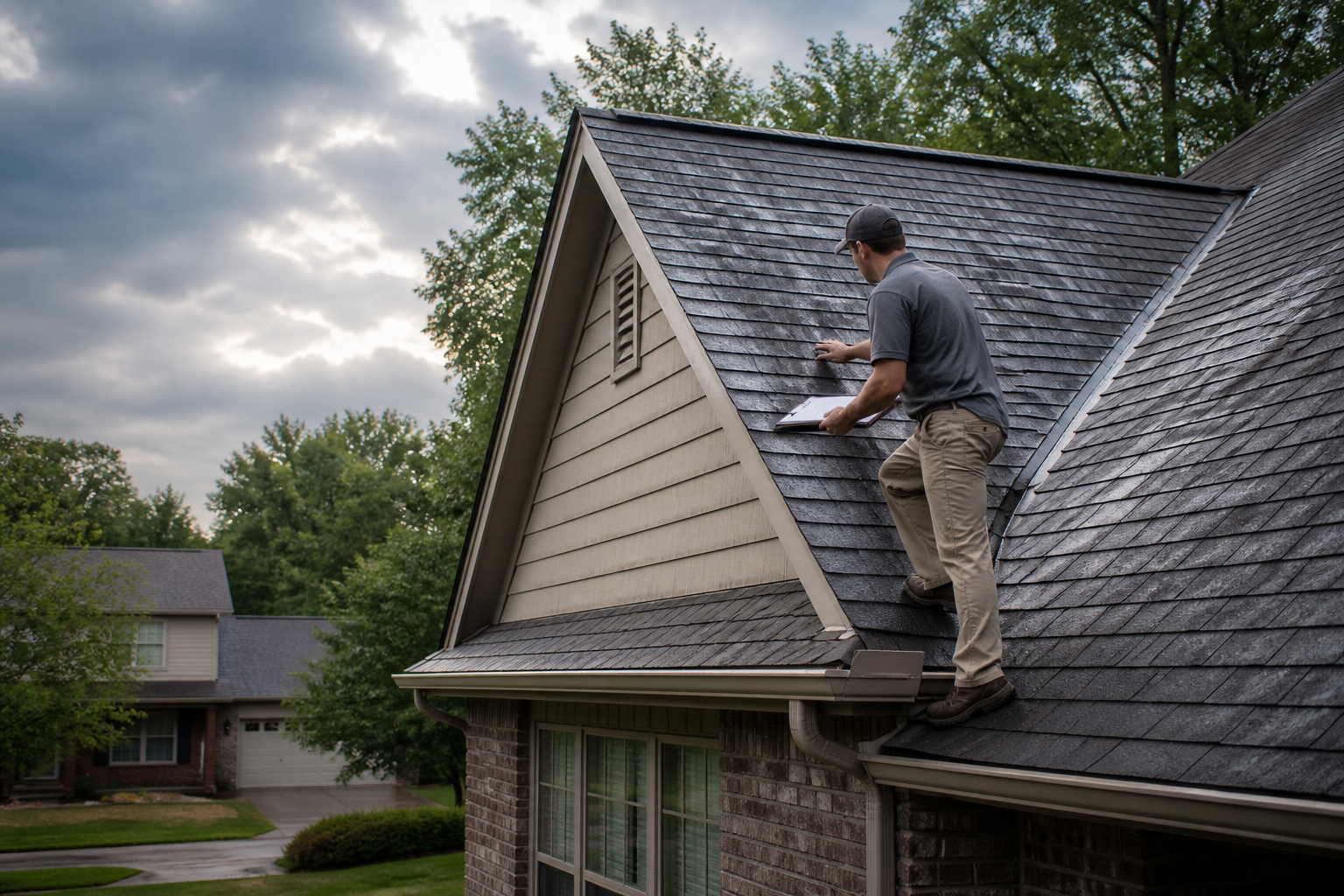
The scope should identify the location, access, materials, and whether adjacent shingles, siding, masonry, or decking need to be disturbed. Photographs are especially helpful when a wall or chimney hides part of the detail.
If the leak is interior, note where the stain appears and whether it tracks with wind direction. Water can enter above the visible area, so a repair recommendation without tracing evidence is incomplete.
A sensible maintenance habit
Keep gutters clear, trim branches that abrade roof edges, and look for cracked sealant or lifted metal from the ground. Schedule a professional inspection when you see recurring stains, loose siding at a roof line, or unexplained dampness in the attic.
Early flashing work is often less disruptive than waiting until decking, insulation, drywall, and interior finishes are involved.
A better roof decision starts with a visible scope.
- ✓Identify the specific flashing detail that failed
- ✓Replace or rework metal instead of relying on surface caulk
- ✓Document how adjacent materials will be disturbed and restored
- ✓Trace interior water before choosing a repair
Turn the answer into a roof decision.
Use the related service pages for a property-specific conversation, then keep learning with the guides that answer the questions homeowners ask before they call.