Roof Leak Repair Across North Indianapolis
A ceiling stain is a clue, not a map. North Indy Roof Co. traces water back to the roof detail that is actually letting it in, then makes the repair in a way that does not depend on a bead of caulk surviving another season.

Roof leak repair is the process of locating the entry point, protecting the home from further water intrusion, correcting the failed roof detail, and checking the surrounding assembly for related damage. The visible stain may be several feet away from the source.
Where leaks commonly begin
Leaks often start at flashing around chimneys, walls, skylights, and roof-to-roof intersections. They can also begin at pipe boots, exposed fasteners, damaged shingles, open valleys, or an edge where water is backing up behind the gutter. The interior stain only shows where water finally found a path downward.
Wind-driven rain makes the tracing harder because it can move sideways under shingles and along decking. That is why a patch placed directly above a stain can fail even when the patch itself looks intact.
What happens during a leak inspection
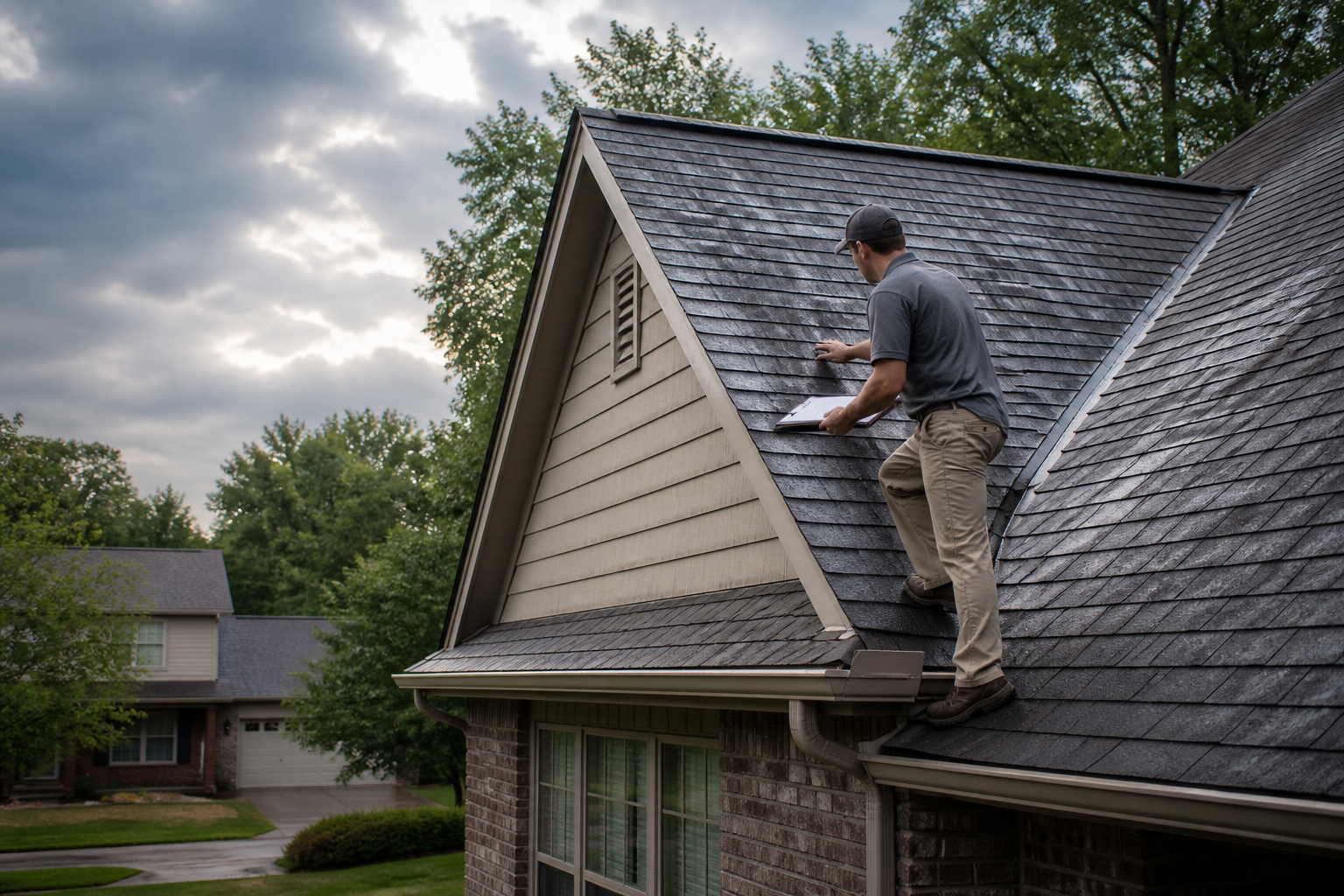
We start with the interior evidence: stains, bubbling paint, damp insulation, and the timing of the leak. Outside, we work through the roof plane and every penetration above the affected area, checking for displaced material, failed sealant, lifted flashing, and drainage issues.
If the roof is safe to access, photographs show the defect and the repair path. If conditions are unsafe or the leak is active, we prioritize temporary protection and return for the permanent work when the surface can be inspected properly.
When a leak needs more than a patch
A leak can expose damaged decking, wet insulation, mold growth, or corrosion around a penetration. Those conditions do not always require a whole roof, but they do change the scope. We explain what is visible, what is likely, and what can only be confirmed once the affected area is opened.
Repeated leaks in the same area are a sign that the original detail was never corrected. Adding more sealant may make the roof look fixed while leaving the water path underneath.
What to do before a roofer arrives
Move valuables away from the stain, place a container under active dripping, and photograph the interior and exterior conditions from a safe place. Do not climb onto a wet roof or cut into the ceiling unless an emergency professional tells you it is necessary.
If the leak started after wind or hail, preserve the timing and photos for your insurer. A written inspection and clear repair record can help separate storm damage from older maintenance issues.
A better roof decision starts with a visible scope.
- ✓Trace the source instead of repairing only the ceiling stain
- ✓Inspect flashing, penetrations, valleys, edges, and attic evidence
- ✓Use temporary protection when weather prevents a permanent repair
- ✓Document storm-related timing before conditions change
Turn the answer into a roof decision.
Use the related service pages for a property-specific conversation, then keep learning with the guides that answer the questions homeowners ask before they call.