Roof Vent Repair and Attic Airflow Corrections
A roof vent is only one part of an attic airflow system. When intake, exhaust, insulation, and moisture control are out of balance, the symptoms can show up as roof aging, condensation, ice dams, or uncomfortable rooms.
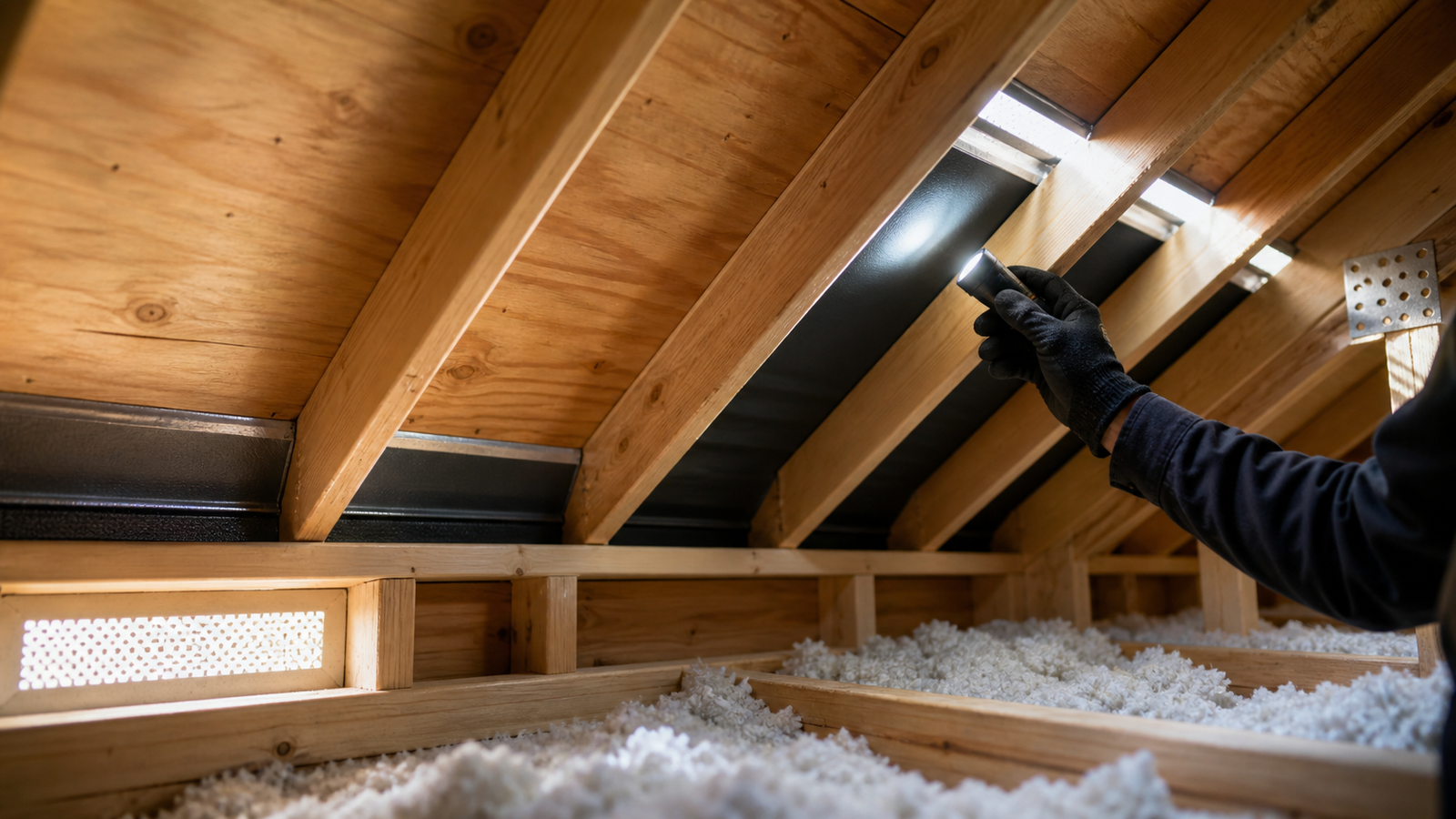
Roof vent repair corrects damaged, leaking, blocked, or poorly integrated roof ventilation components and checks whether the attic has a workable intake-and-exhaust path. Replacing a cap alone is not the same as fixing the ventilation system.
The system has two sides
Exhaust vents such as ridge vents, box vents, or powered fans can only move air if replacement air can enter through soffit or other designed intake. Blocking intake with insulation or using an exhaust fan without a balanced path can leave the attic performing worse than expected.
We look at the roofline and the attic together. A visible vent may be sound while the actual problem is blocked intake, an unvented bathroom fan, compressed insulation, or a roof shape that needs a different approach.
Common roof vent repair problems
Cracked vent housings, failed boots, loose flashing, exposed fasteners, and poorly sealed bases can create leaks independent of the larger airflow question. Those components need to be repaired as roof details, not treated only as an HVAC issue.
If a power fan is installed, check whether it is solving a measured problem or pulling conditioned air from the home. The correct response may be intake improvement, insulation correction, passive ventilation, or a targeted vent replacement.
What good airflow looks like
The attic should stay reasonably dry, insulation should not block designed intake, and air should have a continuous path from the eaves toward exhaust. The exact configuration depends on the roof and insulation assembly, so a one-size-fits-all vent count is not a responsible design method.
We photograph the conditions we can see and explain which corrections are certain, which are recommended, and which require additional access or an HVAC professional.
When to schedule an inspection
Schedule a roof-and-attic review if you see winter condensation, recurring ice dams, mold-like staining, premature shingle wear, bathroom moisture in the attic, or a vent that leaks after rain. Addressing the cause protects both the roof and the interior.
The new attic assessment image on this page shows the kind of airflow detail that should be visible in a professional conversation: intake, exhaust, insulation clearance, and the roof deck together.
A better roof decision starts with a visible scope.
- ✓Check intake and exhaust as one system
- ✓Separate ventilation problems from leaking vent components
- ✓Look for blocked soffit intake and unvented bathroom fans
- ✓Document what is visible before recommending a larger upgrade
Turn the answer into a roof decision.
Use the related service pages for a property-specific conversation, then keep learning with the guides that answer the questions homeowners ask before they call.