Wind Damage Roof Repair in North Indy
Wind damage is not limited to a missing shingle. Lifted edges, broken seals, exposed underlayment, bent flashing, and loose ridge caps can all let the next storm turn a small defect into an interior leak.
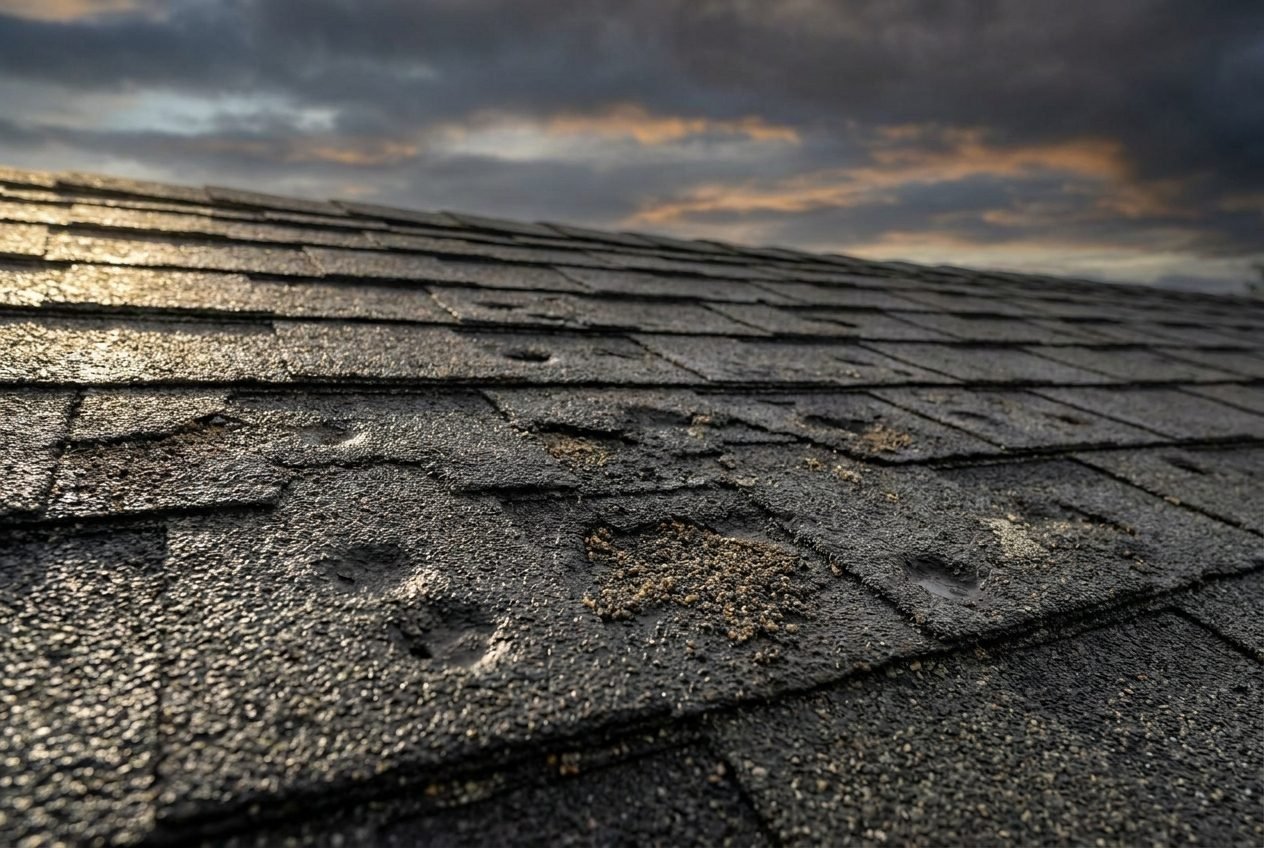
Wind damage roof repair restores roof components that have been lifted, torn, displaced, or loosened by high winds. A proper inspection checks the whole roof for patterns of damage, not just the most obvious missing shingle.
What wind damage actually looks like
Look for missing or shifted shingles, creased tabs, exposed nail heads, lifted ridge caps, torn flashing, and debris impact. The most important defects may not be visible from the ground because the shingle can remain in place while its seal is broken.
Wind patterns also matter. Damage concentrated on one slope, ridge, or roof edge can tell an inspector more than a random-looking spot repair. On homes near open fields or reservoirs, exposure may be different from a sheltered subdivision a few streets away.
Why a same-day patch is not always the full answer
A loose shingle can be replaced quickly, but the repair should also check the surrounding courses and fasteners. If the material is brittle or the seal strip has failed across a larger area, replacing one visible piece may leave the roof vulnerable.
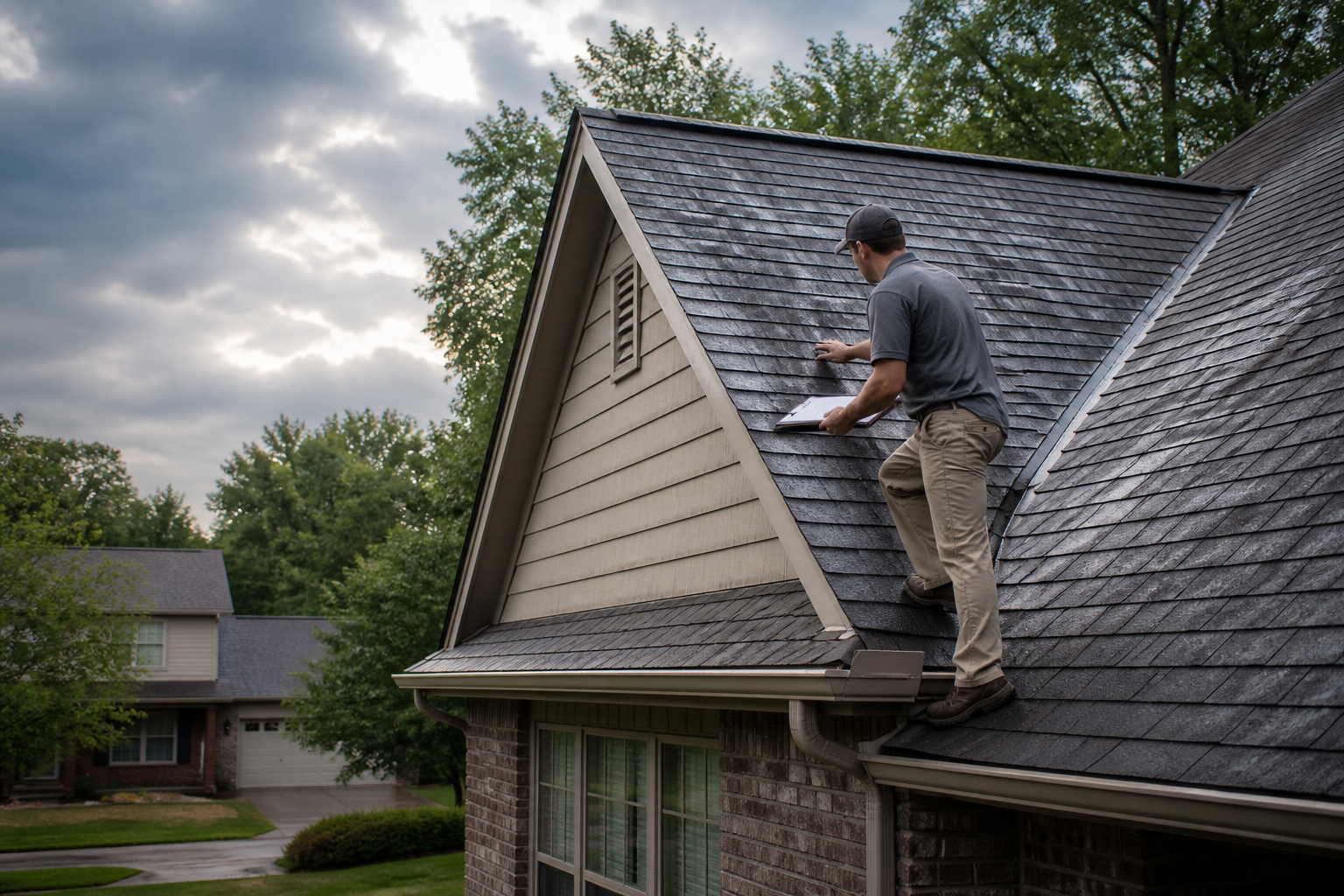
We photograph the damage before work and identify whether the cause appears storm-related, maintenance-related, or mixed. That distinction is useful if an insurance claim is involved and keeps the repair scope honest.
How storm documentation helps
A useful storm report identifies the date or weather event, roof elevations, damaged components, measurements where practical, and photos that show the condition without relying on a vague label such as 'wind damage.' The report should also identify pre-existing wear separately.
Do not let a contractor or adjuster frame the entire decision around a single test square. The question is whether the roof system can be restored with matching, properly installed components and whether additional damage is present.
When to move from repair to replacement
Replacement becomes more likely when damage is widespread, the roof is already near the end of its life, matching material is unavailable, or the storm exposed failures across multiple roof details. We explain that transition with photos and a line-item scope.
If water is entering now, ask about temporary protection first. Stopping additional damage protects the home while the permanent repair or claim decision is being worked through.
A better roof decision starts with a visible scope.
- ✓Check ridge caps, edges, penetrations, and seals—not just missing shingles
- ✓Separate storm damage from older wear in the written scope
- ✓Document each affected roof elevation with photos
- ✓Use temporary protection when a permanent repair cannot happen immediately
Turn the answer into a roof decision.
Use the related service pages for a property-specific conversation, then keep learning with the guides that answer the questions homeowners ask before they call.