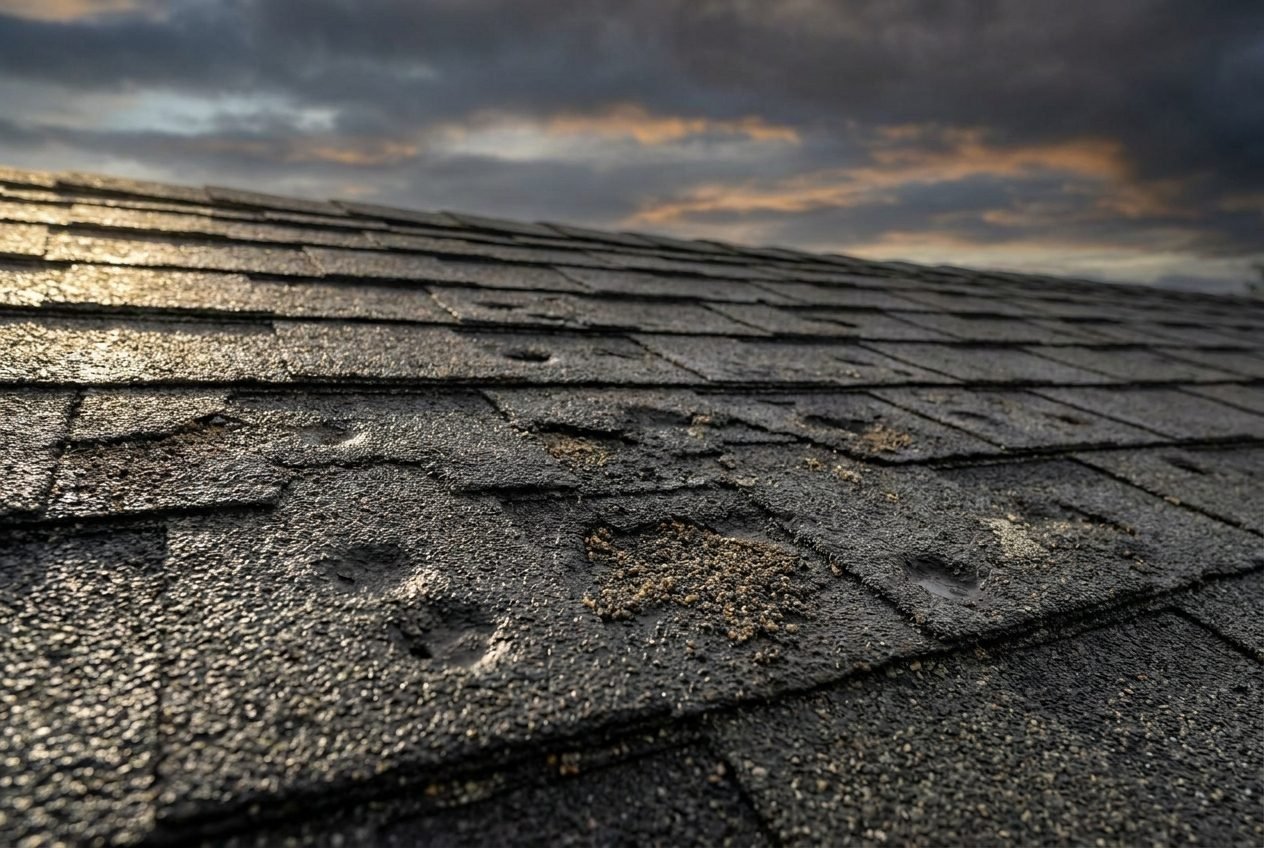
The first 30 minutes
- Make the room safe. If water is near lights, outlets, appliances, or electrical panels, keep clear and contact the appropriate emergency professional. Do not touch wet electrical equipment.
- Contain what you can from the floor. Use buckets or containers and move furniture, electronics, artwork, and stored boxes. Place a board across a ceiling bulge only if it can be done from a safe, dry position; never press into unstable drywall.
- Look from the ground or a window. Note missing shingles, a torn tarp, exposed underlayment, a fallen limb, damaged flashing, or water coming through a roof penetration. Do not go outside during lightning or climb to verify a close-up.
- Photograph the condition. Take wide photos, close photos from safe locations, and images of interior damage. Keep a note of the weather, time, room, and what changed.
- Call for temporary protection. A tarp or other temporary measure should be installed by someone equipped to work safely. Ask what the temporary work includes and when the permanent inspection will happen.
When a roof problem is an emergency
| Condition | Why it needs prompt attention | Immediate focus |
|---|---|---|
| Active water entering the home | Moisture can spread through insulation, drywall, framing, and electrical areas. | Protect the room, contain water safely, and stop further entry. |
| Large missing roof area or exposed underlayment | The next rain can turn a localized storm defect into interior damage. | Temporary cover and a documented inspection. |
| Tree or branch impact | Damage may involve decking, rafters, gutters, siding, and interior finishes at once. | Stay clear of unstable limbs and arrange a whole-impact assessment. |
| Loose metal, ridge cap, or flashing | Wind can lift more material or allow wind-driven rain behind the roof system. | Do not pull or nail it down from a ladder; request safe stabilization. |
| Ceiling bulge or saturated insulation | Weight and hidden moisture can create a secondary interior hazard. | Keep people out of the area and involve the right emergency professional. |
What not to do
- Do not walk on a wet roof, tarp, damaged shingles, or a roof with visible structural movement.
- Do not nail a tarp through the visible roof surface without a safe, appropriate temporary method.
- Do not smear roofing cement over a flashing or valley problem and assume the leak is solved.
- Do not throw away damaged materials before photographing them when an insurance claim may be involved.
- Do not sign a full replacement contract during the first stressful conversation if you have not seen the scope.
- Do not let an emergency label decide the permanent repair before the roof is inspected.
Temporary protection and insurance
Temporary work exists to prevent additional damage, not to decide the final scope. Indiana Department of Insurance guidance advises homeowners to notify the insurer, photograph damage, make necessary temporary repairs, save receipts, and avoid permanent repairs before the carrier has inspected when possible. Read the full roof inspection and insurance claim checklist for the sequence.
If the storm was severe, the National Weather Service Indianapolis storm-reporting page explains the kinds of wind and hail evidence that can be reported. A weather report does not prove damage to a particular roof, but it is useful context to keep with the property record.
What the permanent inspection should answer
Once the home is protected and conditions are safe, the inspection should answer four questions:
- Where did water or wind enter the roof system?
- How far did damage move into decking, insulation, framing, gutters, siding, or interior finishes?
- Is the condition isolated enough for a repair, or is the roof system broadly compromised?
- What needs to happen now, what can wait, and what documentation should be kept?
The answer may be a targeted roof leak repair, a safe tarp while materials are arranged, a storm-damage scope, or a full replacement. The evidence should drive that decision.
Get a safe first response in North Indy
North Indy Roof Co. provides emergency roof tarping, storm-damage inspections, and repair guidance across Hamilton, Boone, Hancock, and Marion County. If water is entering, start with safety and temporary protection, then request the inspection that turns the emergency into a clear scope.