Residential Roofing for North Indianapolis Homes
A residential roof is a system, not a stack of shingles. North Indy Roof Co. helps homeowners choose, repair, replace, and maintain roofing that fits the house, the neighborhood, and the way the property is actually used.
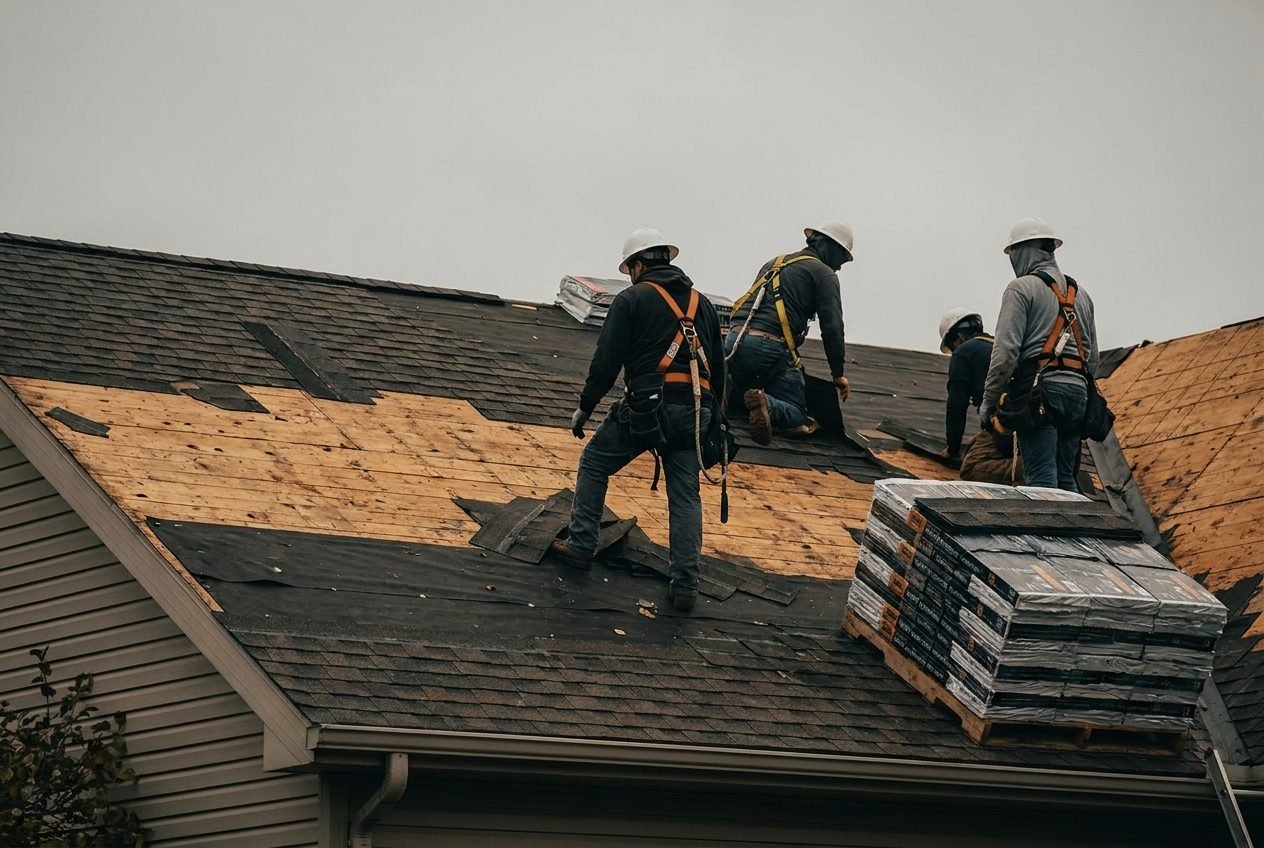
Residential roofing is the planning and installation of a complete roof system for a single-family home, including decking, underlayment, flashing, ventilation, shingles or panels, and water management at the eaves. The right scope starts with the existing roof and the home beneath it—not with a material brochure.
What a complete residential roof scope includes
A credible residential roofing scope accounts for the roof deck, leak-prone transitions, pipe boots, valleys, wall flashing, underlayment, drip edge, ventilation, and disposal. It also explains what happens if concealed decking is damaged once the old roof is removed. That level of detail matters because the cheapest line on an estimate often leaves the most important layer implied.
On a North Indy home, the roofline may cross several construction eras: an original house, a rear addition, a dormer, or a porch roof tied into the main slope. Those intersections deserve their own inspection notes. A roof that looks simple from the driveway can still need careful sequencing at valleys and wall lines.
How we match the roof to the property
Material choice depends on more than color. We look at roof pitch, tree cover, sun exposure, attic ventilation, lake or open-field wind exposure, neighborhood appearance, and how long you expect to own the home. Asphalt shingles may be the practical fit for one Carmel or Fishers roof; a metal accent or full standing-seam system may make more sense on a custom or waterfront property.
We also separate essential work from optional upgrades. Better ventilation can be worthwhile when the attic has a documented heat or moisture problem; it should not be sold as a magic add-on without checking intake, insulation, and the roof geometry first.
What homeowners should ask before signing
Ask who will be your point of contact, whether the replacement is a full tear-off, how decking is priced, what flashing is replaced, and which party handles permits and final cleanup. Ask to see the exact shingle or panel specification rather than accepting a brand name alone.
A good estimate should leave you with fewer questions than you started with. If you cannot tell what is included, what is excluded, or what happens if the roof is worse under the surface, the scope is not ready to compare.
The practical next step
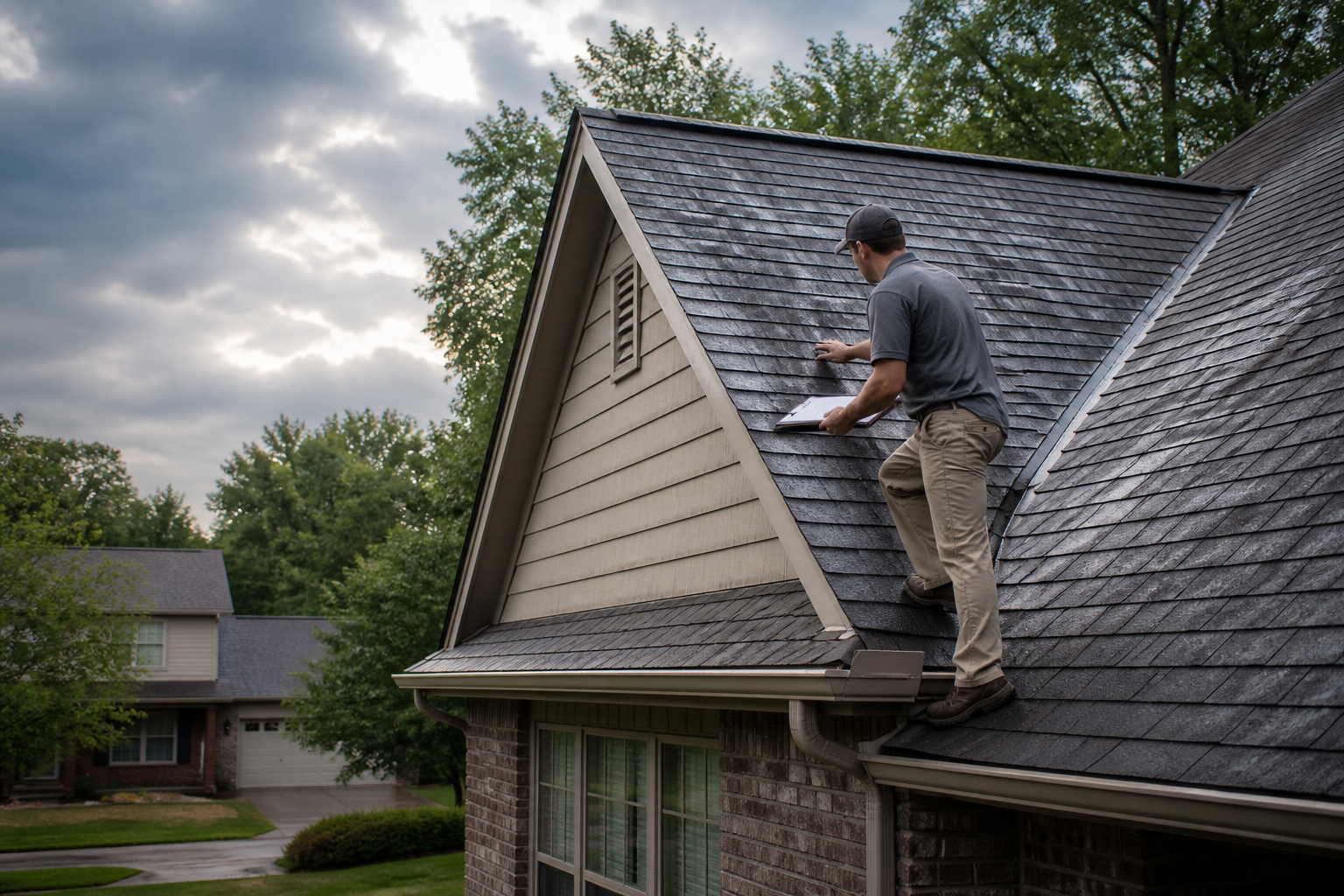
A free inspection gives you a property-specific starting point without committing you to replacement. We photograph the conditions that matter, explain whether repair or replacement is the better path, and connect the recommendation to the home's actual roof system.
For a second opinion, bring your existing estimate, insurance paperwork, or inspection report. Comparing scopes line by line is more useful than comparing two totals with different assumptions.
A better roof decision starts with a visible scope.
- ✓Full tear-off and deck review when replacement is needed
- ✓Flashing, underlayment, ventilation, and drainage considered as one system
- ✓Clear separation between required work and optional upgrades
- ✓Written scope that is easy to review with a homeowner, lender, or adjuster
Turn the answer into a roof decision.
Use the related service pages for a property-specific conversation, then keep learning with the guides that answer the questions homeowners ask before they call.